Written and clinically reviewed by Dr. Johanna Calderón.
Have you been told you do not have enough bone for implants?
ADVANCED IMPLANTOLOGY · COLOMBIA
Our team assesses fixed rehabilitation options for patients with upper-jaw bone loss. Zygomatic and pterygoid implants use different anchorage areas; not every patient needs both or the same number of implants.
Advanced bone loss
Bring your scan and records of previous treatment or grafts. The team confirms which additional investigations are needed.
A planned fixed solution
Ask about the prosthesis, its stages and maintenance as well as the surgery.
Care near you
We coordinate this procedure in our seven cities. Confirm the responsible team, surgical facility and schedule when booking.
Zygomatic implants: combined cases and upper-jaw rehabilitation
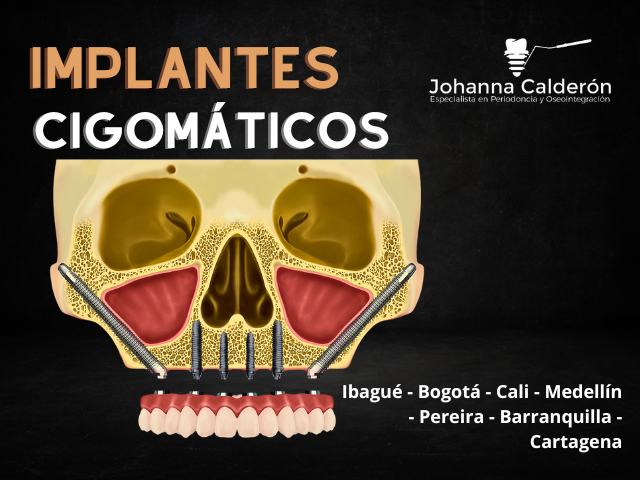
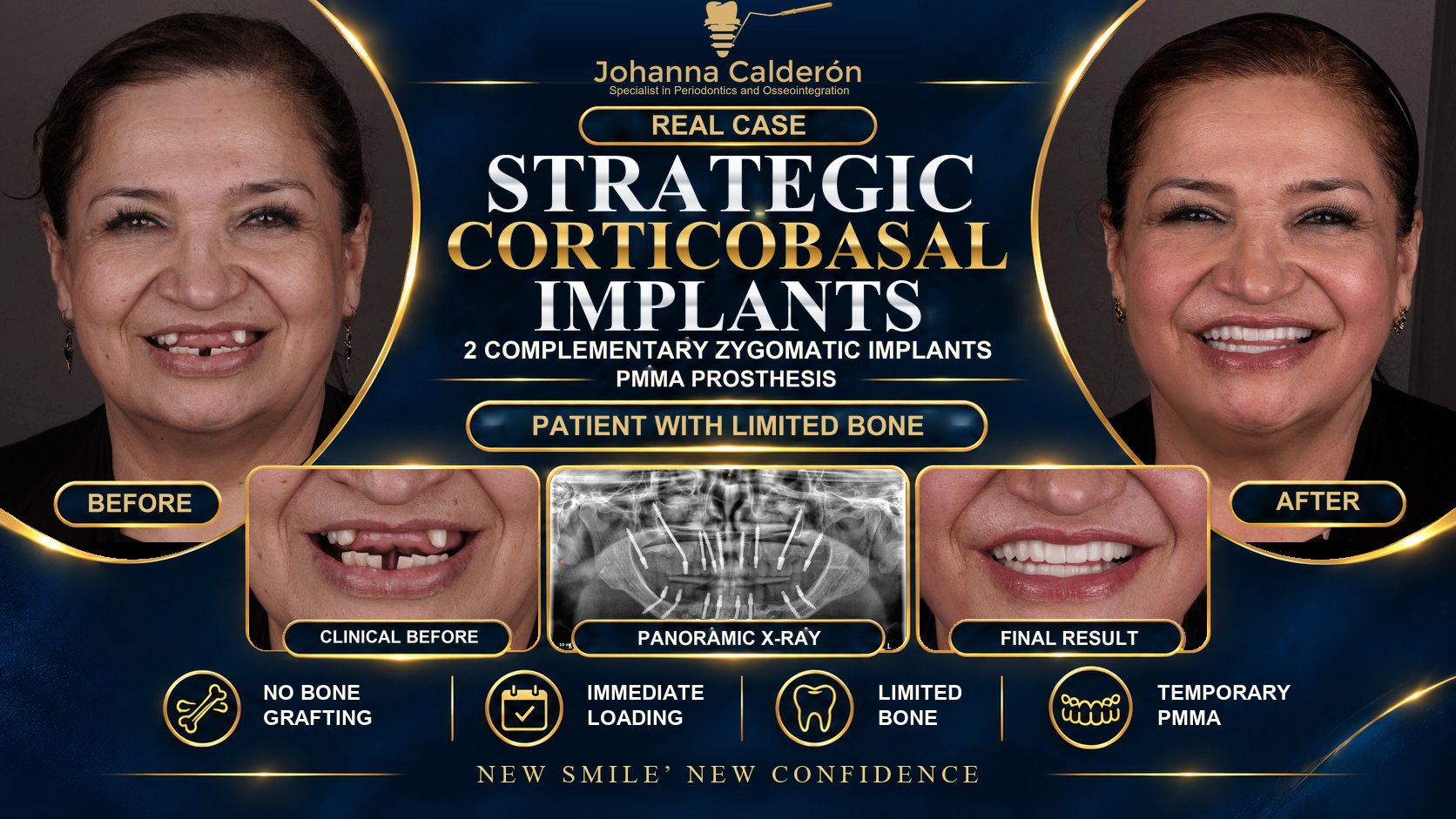
The extent and distribution of upper-jaw atrophy guide the choice of anchorage. We can combine zygomatic implants with conventional or strategic corticobasal implants, or plan upper-jaw rehabilitation using four zygomatic implants when indicated.
Radiographs and planning from different cases
These examples illustrate different implant configurations, rather than a single plan suitable for every patient. Tap each image to view it in full.
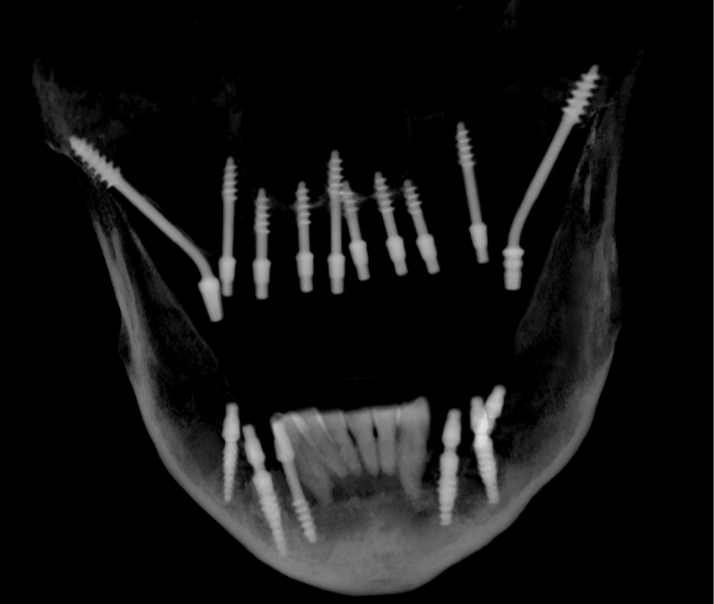
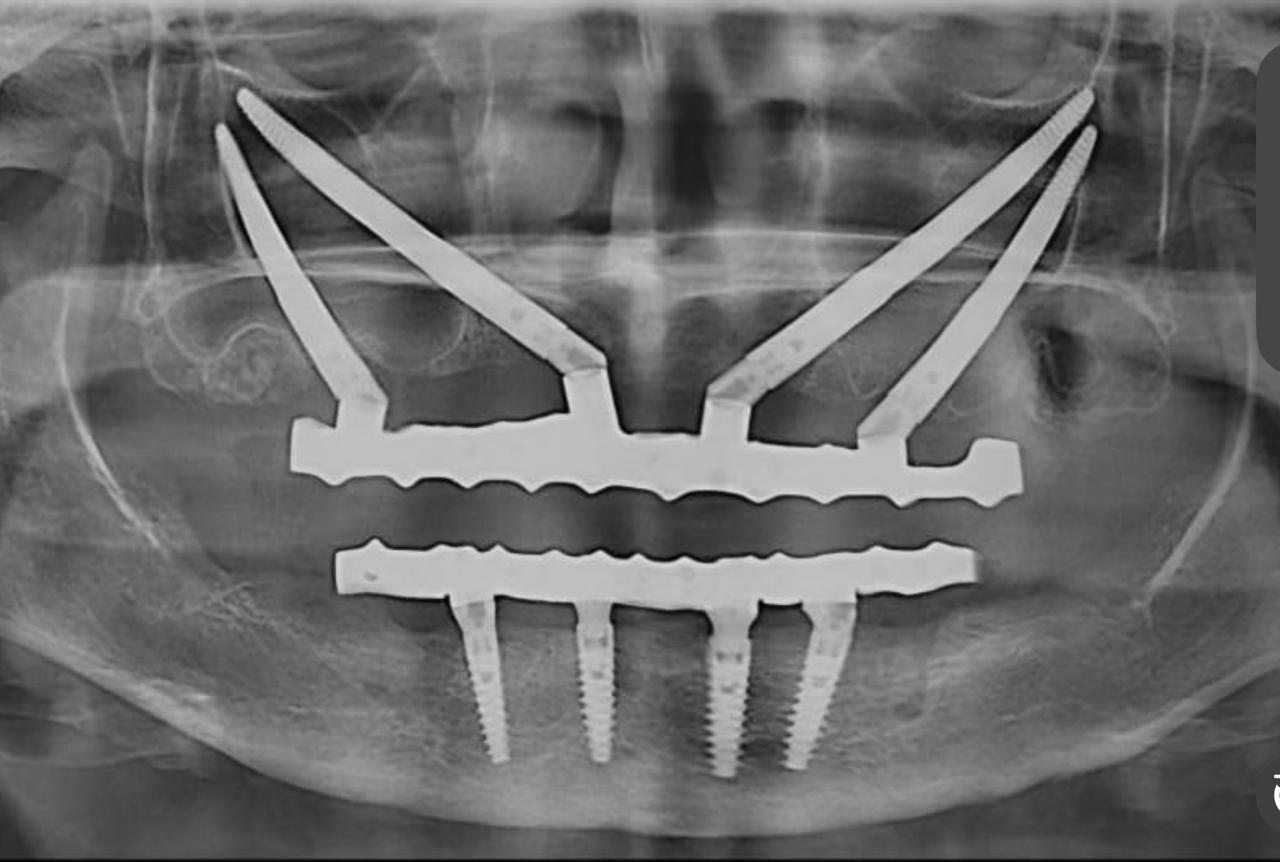
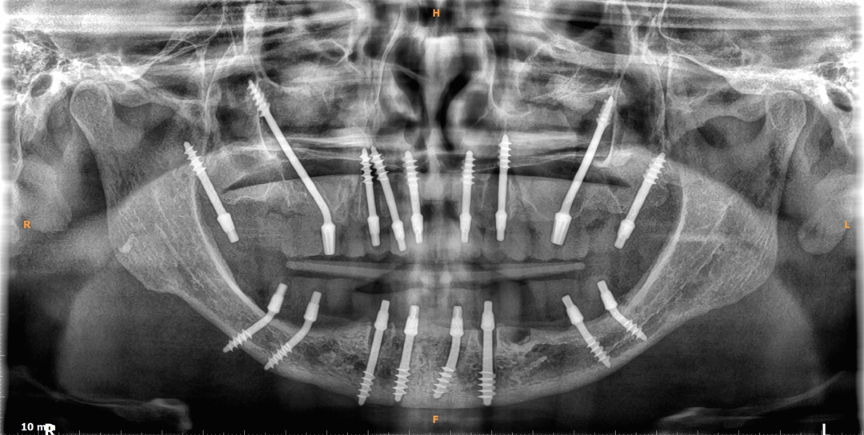
These are individual clinical cases. Imaging, assessment and prosthetic planning determine the indicated configuration. Results and recovery may vary.
Conscious sedation, initial PMMA and the second stage
Conscious sedation
At our clinic, these procedures are performed with conscious sedation to support patient comfort. The preoperative assessment defines anaesthetic planning, instructions and safety requirements.
Fixed PMMA prosthesis
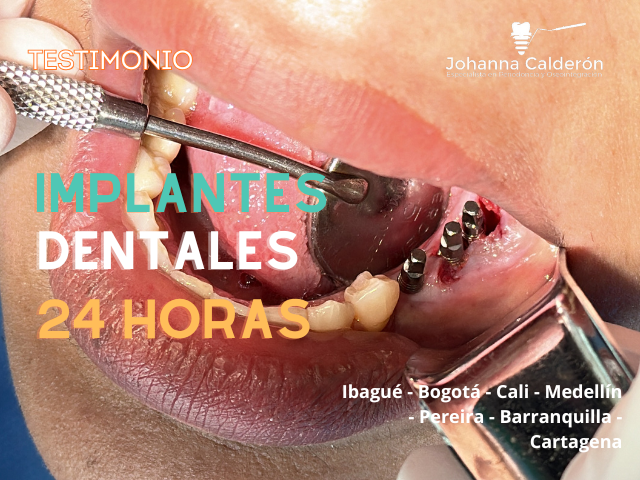
The first stage includes an initial fixed PMMA prosthesis. The team explains delivery, adaptation, diet, hygiene and checkups; it should not be confused with a definitive zirconia prosthesis.
Zirconia if you wish
A change to zirconia can be considered in a second stage if the patient wishes and the clinical team confirms its suitability. Timing and cost are agreed in the individual plan.
Zygomatic and Pterygoid Implants in Colombia (Bogotá, Ibagué, Cali, Pereira, Medellín, Barranquilla and Cartagena)

Clinical information from Dr. Edwin Ardila, a maxillofacial surgeon with years of experience in advanced dental implantology. This section explains the applications, benefits, possible drawbacks and alternatives of zygomatic and pterygoid implants for patients with significant upper-jaw bone loss.
What Are Zygomatic and Pterygoid Dental Implants?
Zygomatic Implants
Zygomatic implants are an implant solution specifically designed for patients who suffer from severe maxillary bone atrophy. Unlike traditional implants, which are anchored in the jawbone, zygomatic implants are fixed into the zygomatic bone, or cheekbone, which is denser and stronger. This makes it possible to provide a solid foundation for fixed dental prostheses, even in cases where the maxillary bone is insufficient to support traditional implants.
Pterygoid Implants
Pterygoid implants, on the other hand, are placed in the pterygoid region, an area of the sphenoid bone located in the posterior part of the upper jaw. The pterygoid trajectory involves the maxillary tuberosity, the pyramidal process of the palatine bone and the pterygoid region of the sphenoid. These implants are considered particularly for the posterior upper jaw. Like zygomatic implants, they provide a viable alternative when bone grafting is not possible or when more invasive surgeries are to be avoided.
Durability of Zygomatic Implants
Zygomatic implants can support lasting rehabilitation with maintenance and checkups. The 2023 ITI consensus reported mean implant survival of 96.2% over a mean 6.3-year follow-up. Implant survival does not mean freedom from complications or a lifetime guarantee. Read the scientific source.
Zygomatic Implant Placement Procedure
Evaluation and Planning:
The first step in placing zygomatic implants is a thorough evaluation of the patient, including radiographic images and CT scans to assess the density and quality of the available bone. With this information, a personalized surgical plan is designed.
Surgical Placement:
At our clinic, these procedures are performed with conscious sedation to support patient comfort. The preoperative assessment and responsible team define the anaesthetic plan and surgical setting. During surgery, the implants are inserted through the upper jaw until they reach the zygomatic bone. In selected cases, the plan may avoid extensive bone grafts. Placing an initial fixed prosthesis through immediate loading depends on the stability achieved and the treatment plan; the first stage uses an initial fixed PMMA prosthesis. A change to zirconia may be considered in a second stage if the patient wishes.
Recovery:
Swelling and discomfort may occur after surgery. The team provides instructions on medication, diet, hygiene, checkups and warning signs. Returning to activities and travelling are planned according to the surgery and recovery, without setting the same timeframe for everyone.
How Long Do Zygomatic Implants Last?
Durability requires hygiene, checkups and maintenance of both the implants and the prosthesis. Rehabilitation can function for many years, but prognosis is individual and repairs or additional treatment may be needed.
Price of Zygomatic Implants in Colombia
The current reference confirmed by the clinic on November 5, 2026 is COP 4,500,000–5,700,000 per zygomatic implant. This is a per-unit figure, not the price of the entire rehabilitation. Ask for written confirmation of what is included and how surgery, anaesthesia, the initial prosthesis, the definitive prosthesis and checkups are priced. Complexity and materials affect the estimate.
Who Are Zygomatic and Pterygoid Implants Recommended For?
These implants are mainly indicated for patients with:
- Severe upper jaw atrophy: when the amount of available bone is insufficient to support traditional implants.
- Failure of previous bone grafts: patients who have not had success with bone grafts or who are not ideal candidates for them.
- Patients with removable dentures: those seeking a fixed and stable solution to improve their quality of life.
- Need for rapid rehabilitation: speed is a rehabilitation objective, but is not a surgical indication on its own; suitability must be confirmed first.
Advantages and Disadvantages of Zygomatic Implants
Advantages
- Solution for complex cases: they offer a viable option for patients who otherwise would not be candidates for implants.
- Shorter treatment time: they may avoid extensive grafts in selected cases; duration is estimated from the complete plan.
- Immediate results: an initial fixed prosthesis with immediate loading may be planned when the conditions of the treatment plan are met.
Disadvantages
- Surgical complexity: they require a surgeon with experience in advanced maxillofacial surgery.
- Higher initial cost: although they may be more cost-effective in the long term, the initial cost is higher than that of conventional implants.
- Surgical risks: there are surgical, sinus, tissue and prosthetic risks. Sinusitis is a complication described in the ITI consensus; planning, consent and follow-up must address it.
Alternative: Strategic Implantology — Corticobasal Implants
In addition to zygomatic and pterygoid implants, another innovative alternative for patients with limited bone is strategic implantology, also known as corticobasal implantology. This technique uses basal bone, which is denser and more stable, to place implants. The number of operations alone does not distinguish these techniques. In our strategic protocol, immediate loading with initial fixed teeth within 24–72 hours forms part of treatment once this technique is indicated.
Advantages of Corticobasal Implants:
- Other anchorage areas: assessment determines whether grafting can be avoided.
- Individual planning: invasiveness and complexity depend on the case; the techniques are not interchangeable.
- Immediate loading: patients can enjoy a fixed prosthesis within a few days.
Which Option Is Better?
Choosing between zygomatic implants, pterygoid implants, or corticobasal implants depends on the quantity and quality of available bone, as well as the patient’s overall health. It is important to consult a specialist who can perform a personalized evaluation and determine the most appropriate treatment.
Conclusion
Zygomatic implants, pterygoid implants and strategic implantology offer alternatives for different patterns of bone loss. Suitability depends on anatomy and the rehabilitation plan; no option can be assumed always to have fewer complications. If you have been told that you cannot have implants due to lack of bone, it is recommended that you explore these advanced options with a maxillofacial surgery specialist.
For more information or to schedule a consultation, feel free to contact us. We are here to help you recover your smile and quality of life.
Financing options can also be key when managing treatment costs. If you would like to evaluate this option, contact us so we can provide different alternatives.
Feel free to contact us so we can learn about your case and guide you through the process. We provide care in Ibagué, Bogotá, Cali, Medellín, Barranquilla, and Cartagena.
Visit our social media channels and learn more about us. You can find us on Instagram as @periodoncista_johanna_calderon and on Facebook as @DraJohannaCalderon.
Zygomatic, pterygoid and other alternatives: what to compare
The choice depends on your anatomy and rehabilitation plan. Limited bone does not mean that every patient needs the same implants.
| Option | Anchorage area or approach | What the assessment should clarify |
|---|---|---|
| Zygomatic implants | The zygomatic or cheekbone, for upper-jaw rehabilitation. | Why they are indicated and how they combine with the rest of the rehabilitation. |
| Pterygoid implants | The posterior upper jaw and pterygomaxillary complex. | Available posterior support and the planned trajectory. |
| Conventional implants and grafts | A plan based on available bone or its reconstruction. | Whether they are suitable alternatives and what stages they involve. |
| Strategic corticobasal implantology | Another anchorage and rehabilitation option assessed individually. | The specific indication; this is not automatically equivalent to a zygomatic implant plan. |
From diagnosis to the definitive prosthesis
Assessment
Medical and dental history, expectations, previous treatments and examination.
Investigations and proposal
Review of imaging, alternatives and rehabilitation design. Confirm who performs each stage.
Surgery with conscious sedation
Preoperative assessment, consent, surgical facility, conscious sedation and instructions coordinated by the team.
Initial fixed PMMA prosthesis
The first stage uses PMMA. Request a written delivery schedule, care instructions and adjustments; this initial prosthesis differs from a later zirconia restoration.
Checkups and recovery
Appointments, hygiene, adjustments, diet and care for possible incidents.
Second stage and maintenance
A change to zirconia can be considered if you wish. The team confirms timing, material suitability, cost and long-term reviews.
What your complete estimate should include
A per-implant range alone does not establish the cost of restoring an arch. Compare proposals covering the same scope.
| Item | What to confirm |
|---|---|
| Diagnosis | Assessment, scan and other indicated records; which are included. |
| Surgery | Number and type of implants, extractions or other procedures, team and surgical setting. |
| Anaesthesia | Conscious sedation, preoperative assessment and associated fees; confirm what the proposal includes. |
| Initial fixed prosthesis | First-stage PMMA, extent, delivery and included adjustments. |
| Definitive prosthesis | Optional change to zirconia in a second stage: suitability, manufacture, cost and timing. |
| Follow-up | Checkups, maintenance, repairs and conditions for managing incidents. |
If you are travelling from another country
Before booking travel, confirm any outstanding diagnostic work, length of stay, in-person appointments, the initial and definitive prosthesis schedule, and whether you will need to return. Request a plan for managing incidents after returning home and share your medical history with the team. Do not plan the entire rehabilitation as a single short visit without this preparation.
Zygomatic and pterygoid implants in our cities
We perform this procedure in Bogotá, Cali, Medellín, Barranquilla, Cartagena, Ibagué and Pereira. Each city page explains local care and links to the network clinics; the surgical facility and team are confirmed when booking.
Frequently asked questions before deciding
Are zygomatic and pterygoid implants the same?
No. Their anchorage and role in rehabilitation differ. The proposal should identify which implants are indicated and why.
Are they used in the lower jaw?
The zygomatic implants described here rehabilitate the upper jaw. Lower-jaw problems require their own assessment and alternatives.
Does every patient receive fixed teeth on the day of surgery?
Delivery of the initial fixed prosthesis is planned according to the indicated protocol and the conditions confirmed during treatment. At our clinic, the first stage includes a fixed PMMA prosthesis. A change to zirconia may be considered later if you wish; these are different materials and treatment stages.
Does limited bone mean I cannot have implants?
An assessment of alternatives is worthwhile. Bring your previous investigations and ask which options are viable for your anatomy.
What if I have sinusitis or a history of sinus problems?
Tell the team at your first assessment. Sinus health must be evaluated to determine whether further investigations or care are needed before treatment.
Who will perform my surgery?
When booking, request the responsible professional’s name and training, the restorative team, the surgical facility and who will provide checkups.
Does the per-implant price include the definitive prosthesis?
Do not assume that it does. Request a written proposal distinguishing implants, surgery, anaesthesia, prostheses and follow-up.
Clinical sources for further reading
Assessment requires reviewing bone and sinus health using the indicated imaging. Immediate loading depends on stability and the treatment plan; follow-up and hygiene continue after prosthesis delivery.
Explore related services
Contact us to discuss your case and treatment
Tell us about your needs and preferred city. Our team will contact you to arrange your consultation.
Follow our social media and get to know us

Clinical team
Dra Johanna Calderón
Periodontics and dental implants specialist. Our clinical team provides comprehensive care: dental implants, periodontics, smile design, root canal treatment and general dentistry.
We care for patients from Colombia and abroad and explain an individual plan based on their diagnosis.
Zygomatic and Pterygoid Implants in Colombia at our clinics
Request an individual assessment for Zygomatic and Pterygoid Implants in Colombia at our Colombian clinics. Choose your location to see its address and clinical team and request an appointment. Treatment is planned after clinical assessment.