
Braces and aligners: treatment starts with understanding your bite
If you are looking for braces in Colombia, invisible orthodontics or an orthodontist to assess your case, you can compare options here and learn how to arrange care in your city.
Our orthodontic team in each city examines tooth position, the bite and gum health before proposing treatment. We work with Invisalign, Smartee and Colombian-made aligners; the system is selected according to the clinical indication, the plan and availability at the clinic.
Crowded or spaced teeth
An assessment helps determine whether space needs to be created, gaps closed or the movement of several teeth coordinated. Appearance alone does not define the plan.
A bite that needs assessment
If you notice that your teeth do not fit together, arrange an assessment. The orthodontist distinguishes tooth-position problems from those that also involve the jaws.
Teeth that have moved again
If you have had orthodontic treatment before, we review the current position and your retainers before deciding whether you need adjustments or further treatment.
Orthodontics is a dental specialty concerned with studying, preventing and correcting developmental changes, the shape of the dental arches and tooth position. Its aim is to move teeth toward a normal bite relationship (the chewing surfaces), or to reposition the whole dental arch, particularly to correct functional chewing problems.
There are different types of orthodontic treatment, including:
Orthodontics with braces
This is the most common type of orthodontic treatment. Metal or ceramic brackets are attached to the teeth and connected by a metal archwire, which applies pressure to move the teeth into their correct positions.
Invisible orthodontics with aligners
This type of orthodontic treatment uses clear, removable aligners to move teeth into their correct positions. The orthodontist prescribes how long to wear and how often to change each aligner, and checks progress at review appointments. There is no single interval for every system and patient.
Surgical orthodontics
This type of orthodontic treatment is used for more severe bite problems that require surgery to correct jaw position.
Each type of orthodontic treatment has advantages and disadvantages. The choice depends on the patient’s needs and preferences and the orthodontist’s recommendation. Orthodontics aims to improve tooth alignment and bite function. Preventing cavities and gum disease also depends on hygiene, checkups and periodontal treatment when necessary.
Roth, MBT and bracket types: what each name means
To understand your proposal, distinguish the treatment prescription, the bracket material and its closing mechanism. These features can be combined: an aesthetic bracket can also be self-ligating.
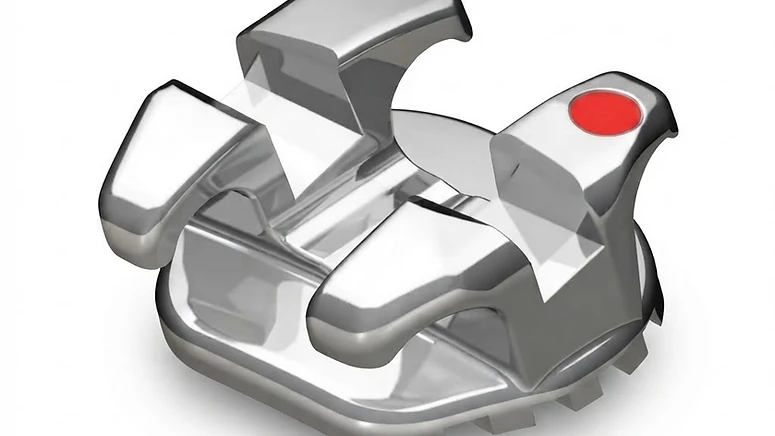
Roth and MBT can look almost identical. The difference lies in the prescription values built into the brackets and the mechanics the orthodontist adapts to your bite. A photograph alone cannot identify the prescription; it is confirmed using the manufacturer’s reference and the treatment plan.
Roth
Closure options: conventional and self-ligating.
This is a straight-wire prescription: each bracket incorporates inclination and orientation values adapted to its position in the dentition. The orthodontist selects archwires and adjustments to direct the movements.
MBT
Closure options: conventional and self-ligating.
This is also a straight-wire prescription, with its own values built into the brackets. It forms part of the planning and mechanics the professional adapts to your bite.
View another commercial example labelled Roth
Commercial image supplied to illustrate a model. The manufacturer’s identification is retained; your treatment’s brand and model are confirmed at the assessment.
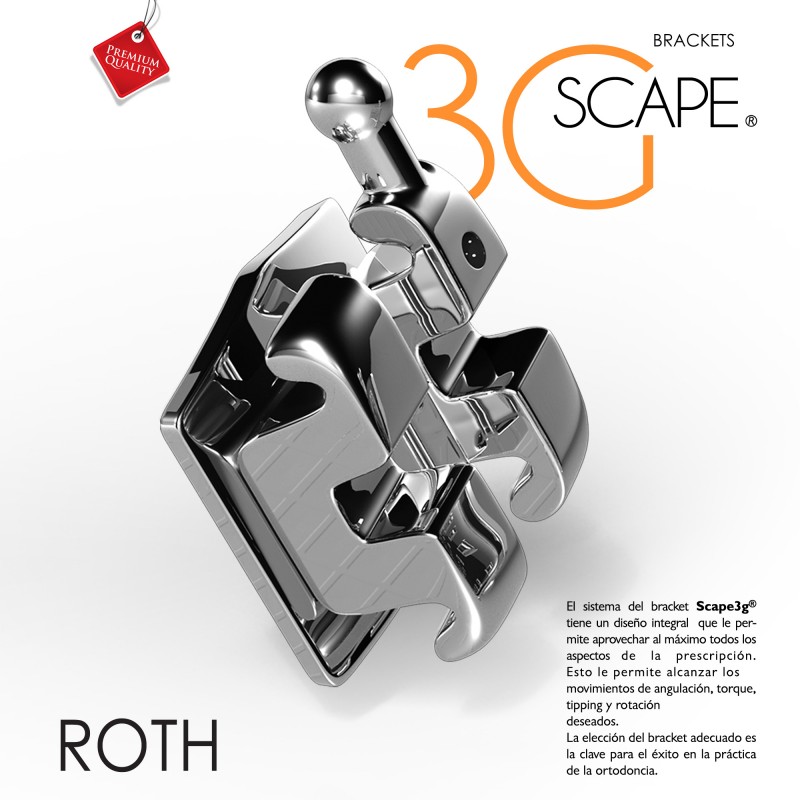
Roth and MBT alone do not indicate whether a bracket uses elastic ties, is metal or is clear. They do not determine treatment duration on their own either.
Conventional and self-ligating: what you are comparing
| Feature | Conventional | Self-ligating braces |
|---|---|---|
| How the archwire is held | With elastic or metal ligatures around the bracket. | With an integrated door or clip. |
| Elastic ties around the bracket | They can be used as ligatures. | They are not needed for the integrated closure to hold the archwire. |
| Elastics between the upper and lower teeth | They may be prescribed to correct the bite. | They may also be prescribed; these are different from ligatures. |
| Hygiene and checkups | Careful cleaning and follow-up are required. | Cleaning and checkups are also required; the closure alone does not prevent plaque. |
| Duration and root care | These depend on the movements, forces, individual response and follow-up. | The system may offer advantages in certain cases; it does not guarantee shorter treatment or the absence of root resorption on its own. |
Study findings on duration and roots are explained in the scientific evidence section.
How the wire is held
The following drawings are educational diagrams of the closure; they do not represent a commercial model or a patient’s result.
WITH LIGATURES
Conventional bracket
The wire is held by ligatures, usually the small elastic ties surrounding each bracket. The bracket may be metal or aesthetic, including conventional sapphire.
WITH A DOOR OR CLIP
Self-ligating bracket
An integrated closure holds the wire. Elastic ligatures are not needed for that function. We use metal and aesthetic options, including self-ligating sapphire.
SAPPHIRE WITH ELASTIC TIES
Conventional sapphire
This combines sapphire’s translucent appearance with ligatures that hold the archwire. The ligatures can change in appearance and are checked at review appointments.
SAPPHIRE WITHOUT ELASTIC LIGATURES
Self-ligating sapphire
This is an aesthetic option with an integrated archwire closure. The orthodontist confirms the model, its features and whether it is indicated for the movements you need.
What about elastics between the upper and lower teeth?
These differ from the ties surrounding each bracket. They connect upper and lower teeth to help correct the bite and can be prescribed with both conventional and self-ligating braces. Follow the orthodontist’s prescribed instructions.
Our orthodontic team in each city confirms the available options and explains the combination selected for your case. We also offer Invisalign, Smartee and Colombian-made aligners.
Braces or clear aligners?
Both are orthodontic tools. The choice depends on the movements you need, your oral health and your ability to follow instructions. A less visible appliance is not always suitable for every case.
| Option | What it looks like | What to consider |
|---|---|---|
| Metal braces | Visible fixed brackets connected by an archwire. | Cleaning around the appliance, dietary precautions and scheduled checkups. |
| Aesthetic braces: ceramic or sapphire | Fixed appliances with a less visible appearance. | Confirm the material, care, strength and estimate; comfort varies between patients. |
| Self-ligating braces | An integrated closure holds the archwire without elastic ligatures connecting it to the bracket. | It facilitates archwire changes and may offer hygiene advantages. Force selection, checkups and duration are planned for each patient. Learn how we use them. |
| Clear aligners | Custom-made, sequential removable trays. | They require compliance with the wear schedule, tray care and review appointments; attachments or auxiliaries may be needed. |
The diagnosis determines which option can treat your case. Neither a brand nor a bracket type allows a result or duration to be promised without assessment.
Practical comparison: conventional braces, self-ligating braces and aligners
Compare how each option fits into your treatment. Invisalign and Smartee are brands; Colombian-made aligners are other available alternatives. The orthodontist confirms the proposed brand, appliance and plan.
| What to compare | Conventional braces | Self-ligating braces | Clear aligners |
|---|---|---|---|
| How the archwire or appliance is retained | The archwire is held with elastic or metal ligatures. | The archwire is held by an integrated door or clip. | Clear removable trays made for each patient. |
| Appearance | Metal or aesthetic, including sapphire. | Metal or aesthetic, depending on the system. | Clear; visible attachments or elastics may be needed. |
| Removal | They remain bonded throughout treatment. | They remain bonded throughout treatment. | They are removed for eating and cleaning, as instructed. |
| Hygiene | Brushing around the brackets and cleaning between the teeth. | Careful cleaning of the clip and the spaces between the teeth. | Clean the teeth and trays; removability does not replace hygiene. |
| Checkups | Adjustments and follow-up according to the plan. | Archwire changes, closure checks and follow-up according to the plan. | Fit and movement checks; refinements if indicated. |
| Daily commitment | Follow dietary, hygiene and elastic-wear instructions. | Follow dietary, hygiene and elastic-wear instructions. | Follow the prescribed wear time and tray-change schedule. |
| Duration | Depends on the diagnosis, movements and response. | Depends on the full plan; the door alone does not set a completion date. | Depends on the case, prescribed wear and any refinements. |
| Periodontal history | Disease control and individually planned forces are required. | They may be an option after periodontal assessment, with adapted forces and checkups. | Suitability depends on periodontal support, movements and follow-up. |
| What to compare in the estimate | Placement, checkups, repairs, removal and retention. | Appliance model, checkups, repairs, removal and retention. | Brand and plan, trays, attachments, refinements and retention. |
On a phone, swipe the table sideways to see all the options. Roth and MBT are prescriptions: both can be combined with conventional or self-ligating closure.
Types of orthodontic brackets
There are different types of orthodontic brackets, each with advantages and disadvantages. The most common types and their features are presented below:
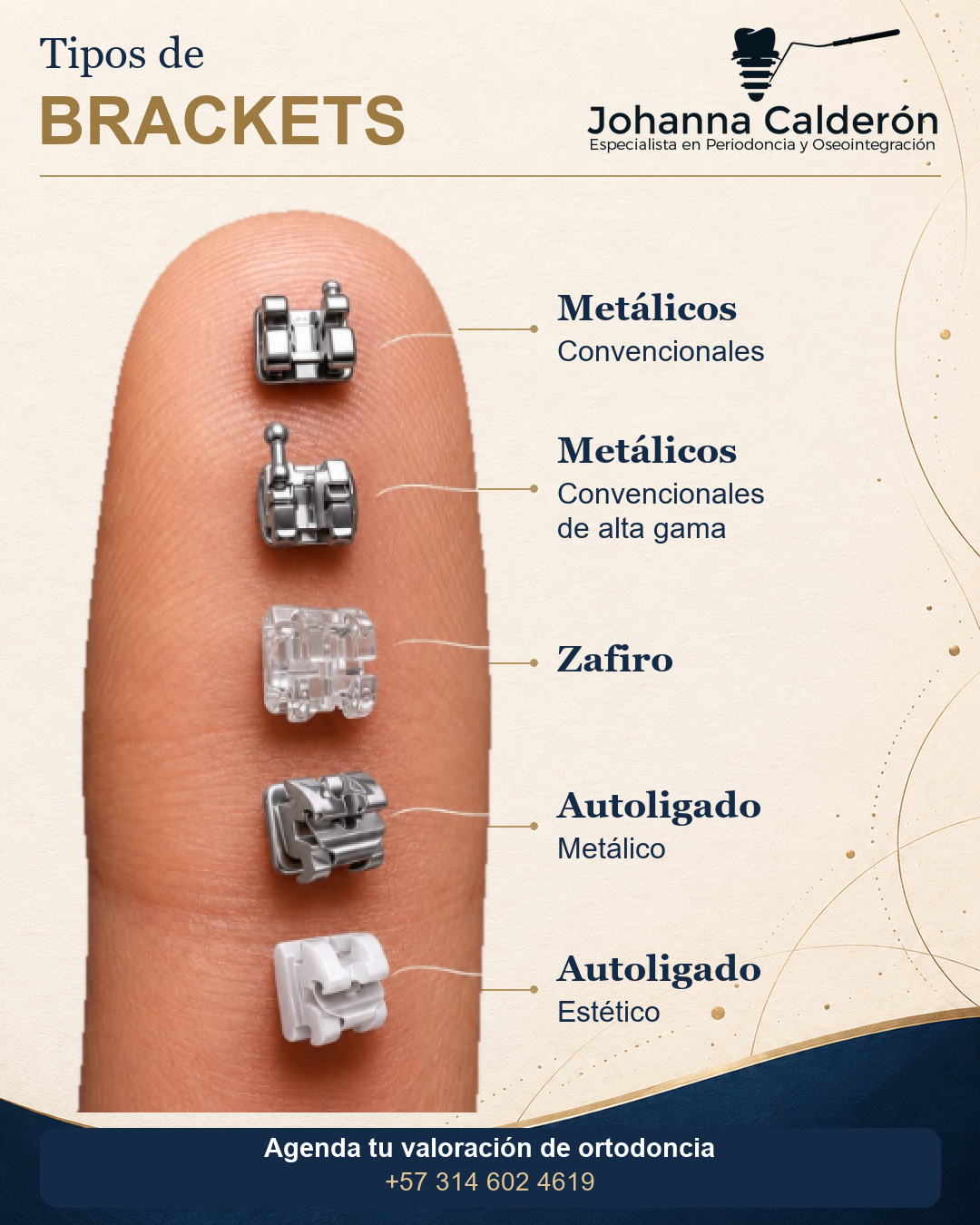
Metal braces
Metal brackets are a common orthodontic option and offer several advantages over other bracket types. Some of their advantages are listed below:
Durability
Metal brackets are strong and durable, making them suitable for correcting complex dental problems.
Effectiveness
Metal brackets give the orthodontist a high level of control, allowing greater precision in tooth movement.
Cost
Metal brackets usually have a lower initial cost than other alternatives, although the complete estimate depends on the case, making them accessible to more patients.
Variety of colours
Metal braces are available in a wide variety of colours, allowing patients to personalise their treatment and express themselves through their braces.
Ceramic braces
Ceramic brackets are an aesthetic orthodontic option that has become increasingly popular in recent years. Some of their features, advantages and disadvantages are presented below:
Features
- Ceramic brackets are made from tooth-like materials and are usually less visible than metal brackets.
- They work in the same way as metal brackets but are more discreet and aesthetic.
- Cost depends on the system, complexity and what is included in the plan. Compare complete estimates without assuming a fixed price order between ceramic, sapphire and aligners.
- They can be combined with metal brackets to reduce treatment cost.
Advantages
- Appearance: ceramic brackets blend with the natural colour of teeth, making them less visible than metal brackets.
- Comfort: adaptation and possible discomfort vary between patients; no material guarantees freedom from irritation.
- Effectiveness: ceramic brackets can correct a wide range of tooth-alignment problems.
- Variety of colours: ceramic brackets have different appearances and, when elastic ligatures are used, colour options may be available. Confirm those offered at your clinic.
Disadvantages
- Durability: strength depends on the design and material; avoid hard foods and habits that could fracture or detach brackets.
- Staining: plaque and some ligatures can change in appearance; hygiene and checkups help maintain their presentation.
- Cost: ceramic brackets are more expensive than metal brackets.
Ceramic brackets are an aesthetic orthodontic option with several advantages over other bracket types. They are a discreet alternative for suitable cases; comfort, strength and cost must be considered according to the system and patient. Each bracket type has advantages and disadvantages, and the choice depends on the patient’s needs and preferences and the orthodontist’s recommendation.
Self-ligating braces: how they work and when we use them
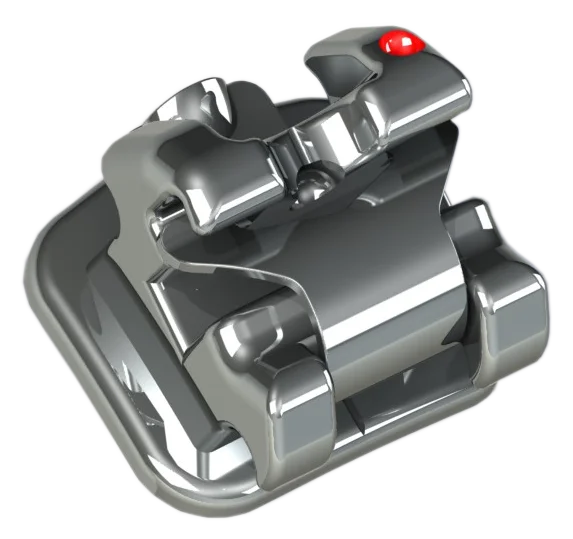
Self-ligating brackets incorporate a door or clip that holds the archwire without the elastic ligatures used to connect it to a conventional bracket. The professional selects the system, archwires and activations to achieve the planned movements.
Tap here to enlarge the image →
Metal
These combine a metal body with an integrated closing mechanism. The archwire is held by the bracket’s door or clip.
Ceramic
These offer a more discreet appearance while retaining the self-ligating mechanism. Availability and design are confirmed at the assessment.
Passive self-ligating

Enlarge the model’s original information sheet →
The closure retains the archwire through a different interaction from an active clip. Its behaviour also depends on archwire size and the treatment stage.
Active self-ligating
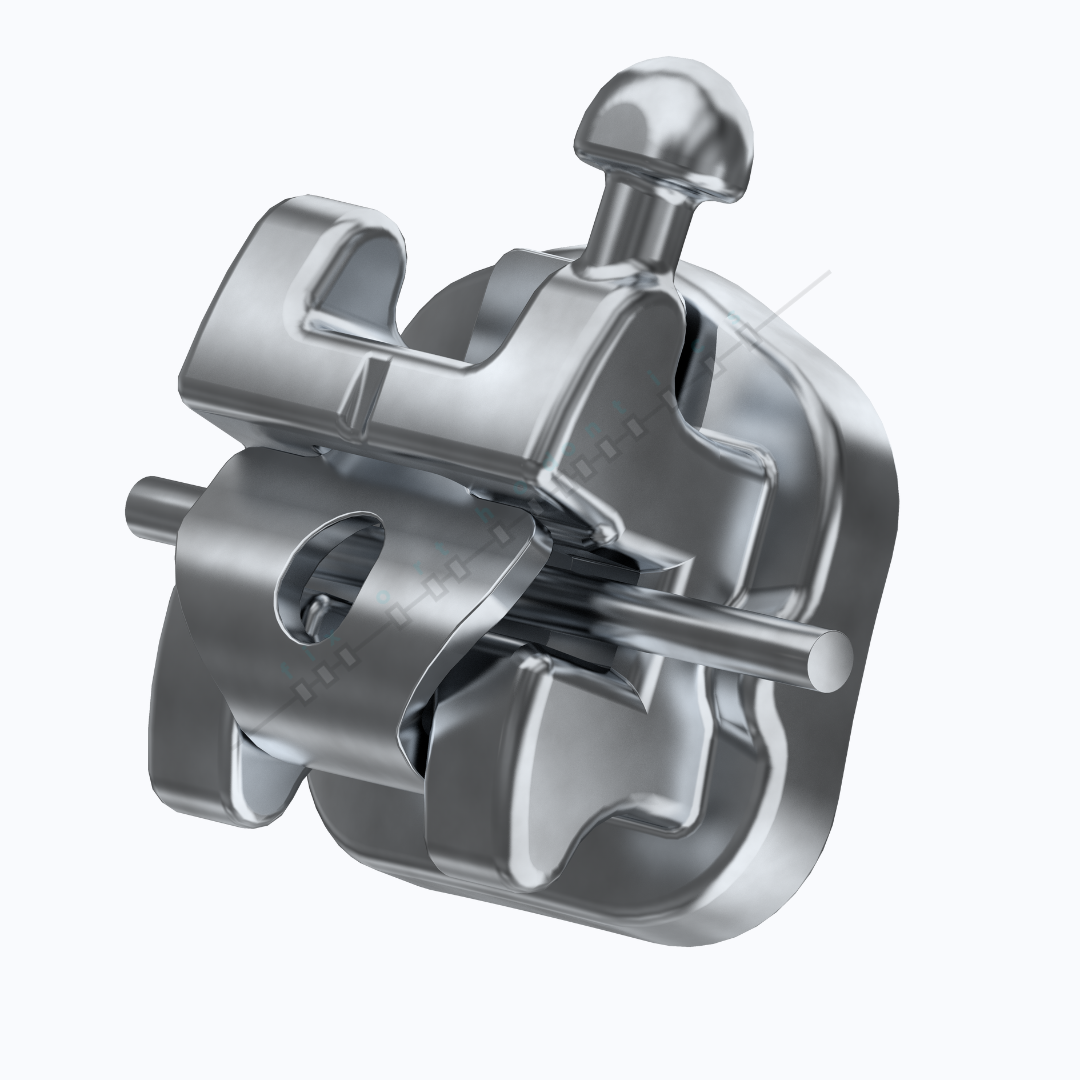
Enlarge the model’s original information sheet →
The clip interacts with the archwire to help control it. The orthodontist opens and closes it during archwire changes and checkups.
Metal or ceramic describes the material; active or passive describes the mechanism. These features are combined according to the selected system.
Potential advantages
Fewer ligature components
The integrated closure makes it easier to secure and release the archwire. At certain stages, it may speed up archwire changes and reduce handling time at appointments.
Hygiene and gum care
A review of clinical trials found favourable plaque and bleeding results with self-ligating brackets, although not for every periodontal indicator. Brushing, interdental cleaning and checkups remain essential. [1]
Tooth movement and root care
Root protection is addressed through diagnosis, the magnitude and direction of forces, archwire selection and monitoring each tooth’s response. Self-ligating brackets may form part of this planning. A 2016 meta-analysis found less resorption in upper central incisors with self-ligating brackets, but no significant differences in the other incisors analysed. The authors called for higher-quality studies to confirm that advantage. This supports explaining a favourable finding without claiming that bracket type protects every tooth. [7] The 2025 tomography review mainly compared aligners with fixed appliances; its overall result does not by itself demonstrate that self-ligating brackets are superior to conventional ones. [2]
Duration, comfort and estimates
Some studies report favourable results for self-ligating brackets. In 2001, Harradine compared 30 Damon SL cases with 30 matched conventional cases and observed an average of four fewer months and four fewer visits with self-ligating brackets. As this was a non-randomised comparison of cases treated by one professional, it does not justify promising the same time saving to every patient. [6] A later review of trials found that many differences between systems were not significant: changing an archwire faster at an appointment or improving an alignment phase does not necessarily shorten the whole treatment. [8] The 2025 multicentre trial also found no significant difference in duration in the population studied. [3] The estimate depends on your bite, the movements and your progress. Adaptation can cause discomfort, with intensity varying between patients and treatment stages.
The estimate should explain which system is used, checkups, possible adjustments and retention. The choice is based on clinical usefulness for your case and the complete plan.
For patients with bone loss: We use self-ligating brackets in selected cases, with controlled periodontal disease and joint orthodontic and periodontal planning. [4]
Sapphire braces
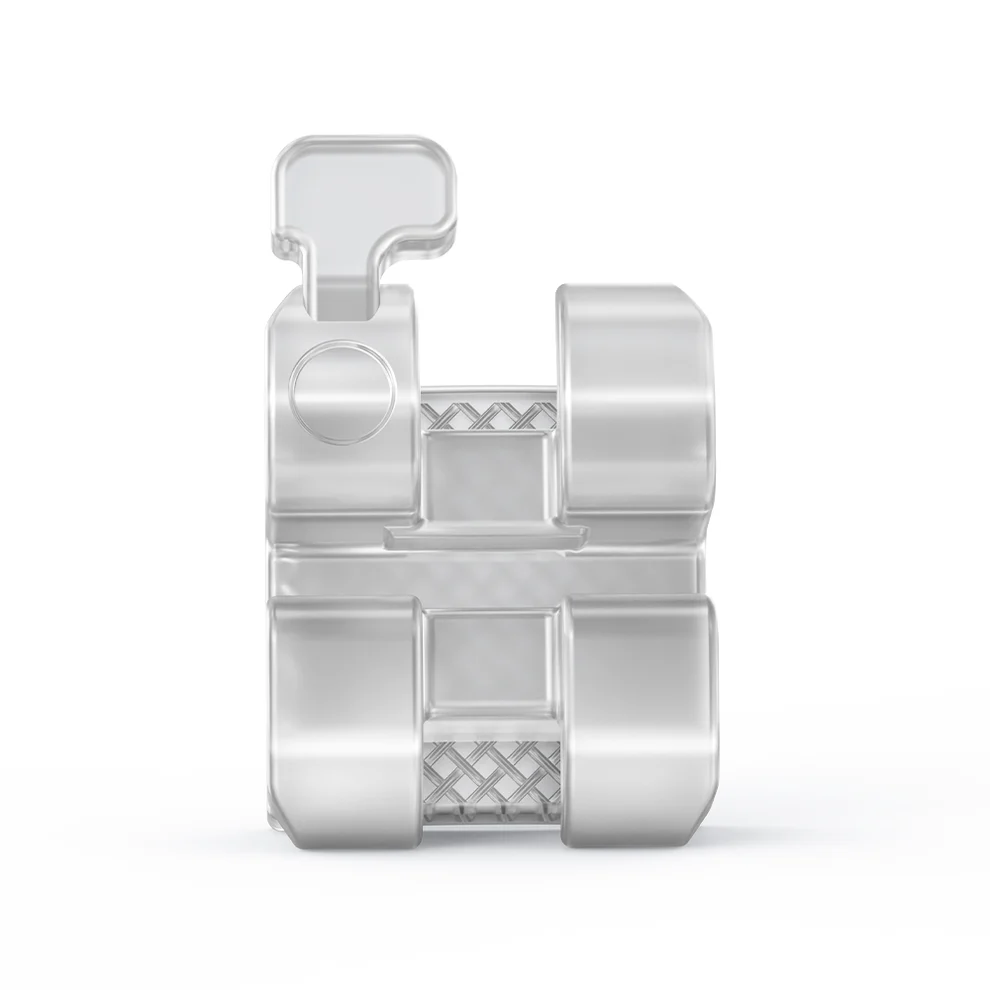
Enlarge the model’s original information sheet →
We offer conventional sapphire and self-ligating sapphire brackets. Conventional brackets use ligatures to hold the archwire; self-ligating brackets incorporate a door. Both may require elastics between the upper and lower teeth if included in your plan. See the visual comparison.
Sapphire brackets are aesthetic brackets with advantages and drawbacks compared with other bracket types. Some of their advantages and disadvantages are presented below:
| Aspect | What you should know |
|---|---|
| ADVANTAGES AND FEATURESAppearance | Sapphire brackets are transparent and blend with the natural colour of teeth, making them less visible than metal brackets. They do not stain over time, so they maintain their original colour throughout treatment. |
| ADVANTAGES AND FEATURESStrength | The sapphire used in brackets is a monocrystalline ceramic. Strength depends on design and use; it cannot be claimed that every sapphire bracket fractures less or bonds better than other alternatives. |
| ADVANTAGES AND FEATURESBonding | Bonding also depends on the base design, adhesive, enamel and placement technique. |
| ADVANTAGES AND FEATURESEase of cleaning | Careful brushing and interdental cleaning with the tools recommended by the professional are required, along with regular checkups. |
| ADVANTAGES AND FEATURESComfort | There may be discomfort during adaptation; the material does not guarantee less irritation for everyone. |
| POINTS TO CONSIDERPrice | Cost depends on the system and complete plan; a higher price alone does not demonstrate better clinical quality. |
| POINTS TO CONSIDERPossible colour changes | Plaque and ligatures may stain and make the appliance more visible. Its overall appearance should be reviewed at checkups. |
Sapphire brackets can be a good option for patients seeking an aesthetic, strong appliance, but their higher cost and the need for good dental hygiene to avoid colour changes should be considered.
Invisalign, Smartee and Colombian-made aligners
Orthodontic treatment with aligners uses a sequence of clear removable appliances to move teeth according to a plan. Invisalign and Smartee are brands; “clear aligners” is the category name. We also offer Colombian-made alternatives.
Invisalign
This is one of the brands we use. The orthodontist determines whether the available system and plan address the movements required in your case.
Smartee
Another aligner alternative that may form part of the clinical proposal. Confirm the plan, what it includes and availability when booking in your city.
Colombian-made aligners
These are locally manufactured options. Ask for the estimate to identify the proposed system, planning, checkups and conditions for adjustments or replacements.
What aligner treatment involves
- Assessment of teeth, bite and gums, with the records prescribed by the professional.
- A movement plan and an explanation of its objectives and limitations.
- Daily wear and changes of each tray according to the orthodontist’s schedule.
- Attachments, elastics or other aids when required by the plan.
- Checkups to assess fit and tooth response; refinements if indicated.
- Retainers after the active phase, with a wear and review schedule.
Not every patient needs the same system or number of aligners. The brand alone does not replace diagnosis and professional follow-up.
Orthodontics to improve how your teeth fit and function
Orthodontics also has functional objectives: studying the bite, improving relationships between teeth and coordinating treatment with the condition of the gums and supporting bone.
Chewing and contacts
We study how teeth contact each other and whether there are interferences or relationships requiring correction. The aim is a functional bite based on the diagnosis.
Forces and tooth support
Contacts exceeding a tooth’s ability to adapt require assessment. Where periodontal support is reduced, force planning and checkups become especially important.
Access for cleaning
Correcting certain tooth positions can make cleaning easier. During treatment, care is needed around appliances and prescribed checkups must be maintained.
Comprehensive care
In selected cases, tooth movements are coordinated with periodontal and restorative care to treat tooth migration or prepare spaces as part of a plan to preserve and restore function.
Gum recession, mobility and tooth loss: investigating the cause
Traumatic forces may be associated with mobility, wear and discomfort when chewing. Gum recession and loss of support or teeth have causes that must be investigated, including periodontal disease. Scientific consensus does not establish that a poor bite alone causes recession or periodontal attachment loss; we therefore assess both occlusion and gum health. [5]
If you notice a loose tooth, receding gums or a change in your bite, request a joint assessment to identify the problem and determine appropriate treatment.
How we plan your orthodontic treatment
Listening and assessment
We review your reasons for seeking care, medical and dental history, previous treatments, teeth and gums. For a child or teenager, the stage of development is also assessed.
Studying and comparing options
The professional prescribes the necessary records and investigations. This information is used to explain the plan, proposed appliances, alternatives and limitations.
Treatment and monitoring
The active phase requires checkups. Frequency and duration are adjusted according to biological response, complexity and cooperation with instructions.
Maintaining and reviewing
Retention is planned once tooth movements are completed. Retainer wear and review appointments form part of ongoing care.
Orthodontics with bone loss: joint assessment and checkups
Bone loss does not automatically rule out orthodontic treatment. For selected patients with treated, stable periodontal disease, movements can be planned to improve tooth position and function. Within our network, self-ligating brackets may be used as part of that plan, following joint assessment.
- Before starting: Treat inflammation and confirm periodontal stability.
- During treatment: Adapt biomechanics to the available support and review gums and tooth response. The EFP guideline recommends periodontal monitoring ideally at every orthodontic appointment.
- If disease recurs: Interrupt active movements, keep teeth passive and treat the recurrence before resuming.
- Afterwards: Continue retention and periodontal care, adapted to individual risk.
The aim is to preserve teeth and restore function within a controlled plan. Suitability and prognosis are confirmed for each patient. [4]
Learn about periodontal assessment and gum treatment.
Before smile design
In some cases it is helpful to align teeth before deciding on veneers or other aesthetic changes. Joint assessment helps identify options and preserve tooth tissue where possible.

Retainers
Dental retainers are devices used after orthodontic treatment to keep teeth in their new positions. Their function is to prevent teeth from returning toward their natural positions after treatment. Inadequate management of retention can lead to loss of the alignment and levelling achieved through orthodontics. Retainers are appliances placed after treatment to help maintain stability. Teeth retain some positional memory, particularly in the first years. Without appropriate retention, they can move again because of their natural tendency to return toward their initial positions.
Fixed retainers:
Fixed retainers are wires placed behind the teeth and held in position with dental resin.
Removable retainers:
These may be custom-made clear trays or appliances with an acrylic plate and wire, such as Hawley retainers. Clear retainers resemble aligners, but their function is to maintain the achieved position.
The orthodontist prescribes the hours of wear and duration of retention. Some plans begin with longer wear followed by night-time wear; the schedule is not the same for every patient.Follow the dentist’s recommendations on retainer wear, as neglect can cause unwanted changes. Wearing retainers and having them checked helps preserve alignment, although changes can occur and the appliances require maintenance. Malocclusion is a bite irregularity, while bruxism is an activity of the chewing muscles; they are not equivalent. An orthodontic retainer does not automatically replace an appliance prescribed for bruxism. Retainers are essential for maintaining orthodontic results and preventing relapse.
Advantages:
- Maintaining the new position: retainers are essential for maintaining orthodontic results and preventing relapse.
- Adaptation: retainers help the body adapt to the new tooth positions and prevent teeth from returning to their previous positions.
- Ease of use: dental retainers are easy to use and comfortable for the patient.
Disadvantages:
- Treatment duration: retainers must be worn for a prolonged period, which some patients may find inconvenient.
- Cost: retainers can be costly, depending on the type and the orthodontic treatment performed.
- Cleaning difficulty: retainers can be difficult to clean, particularly fixed retainers.
Each retainer type has advantages and disadvantages. The choice depends on the patient’s needs and preferences and the orthodontist’s recommendation. Retainers are an essential part of orthodontic treatment and are needed to maintain its results.
Orthodontic and braces prices in Colombia
When comparing prices for braces or invisible orthodontics, distinguish the initial payment from the full treatment cost. The estimate depends on the diagnosis, system and included stages; there is no single fee for every patient.
| Item | What to confirm |
|---|---|
| Assessment and investigations | Consultation, photographs, models, X-rays or scanning when indicated; which are included. |
| Appliances or aligners | Bracket type or aligner system, selected plan and delivery or placement conditions. |
| Checkups | Expected frequency, fee per checkup or inclusion in the total, and conditions if treatment takes longer. |
| Adjustments and incidents | Replacement brackets or aligners, refinements, auxiliaries and possible additional costs. |
| Retention | Appliance removal, retainers, reviews and subsequent replacements. |
| Other treatments | Cleaning, cavities, periodontal treatment, extractions or other indicated procedures; whether quoted separately. |
Request a written proposal and ask about current payment terms. Do not choose solely on a low initial payment: review the expected cost of all stages.
Orthodontics for patients living outside Colombia
If travelling from another country, tell us where you live, how long you can stay in Colombia and how often you can return. The team must assess whether suitable follow-up can be arranged before starting.
- Confirm the in-person appointments needed for diagnosis, delivery or placement, and checkups.
- Ask how incidents are managed while you are abroad and which situations require an in-person assessment.
- If you are already receiving treatment from another professional, bring your records and confirm whether it can continue or requires new planning.
- The plan must include follow-up and retention. Wearing aligners does not mean treatment can proceed without checkups.
Orthodontics usually requires follow-up over a prolonged period. It should not be planned as a complete change in tooth position during a short visit.
Our orthodontic team in Colombia
Ibagué · Dr. Fernando Barrios
Orthodontic treatment with Invisalign and other aligner options, alongside fixed orthodontics using Roth and MBT prescriptions.
Barranquilla · Dr. Darwin Vergara
Dentist with specialist training in Orthodontics and Implantology, and a member of our Barranquilla team.
In Bogotá, Cali, Medellín, Cartagena and Pereira, care is coordinated with our orthodontic teams. Confirm your assigned specialist, clinic and appointment through our central number: +57 314 602 4619.
Find orthodontic care in your city
Explore our network’s clinics and arrange an assessment with the orthodontic team in each city. Confirm the professional, treatment and available hours when booking.
Orthodontics at our clinics
We offer this treatment at our clinics in Colombia. Confirm the treating professional and appointment availability when booking your assessment.
Ibagué
Bogotá
Cali
Medellín
Barranquilla
Cartagena
Pereira
Comprehensive care team
Orthodontic treatment is provided by our orthodontic team in each city. The profiles below represent different areas of the clinic and may participate in comprehensive care according to your diagnosis. Confirm the responsible professional when booking.
Dra. Johanna Calderón

Dr. Edson Cortes Triana
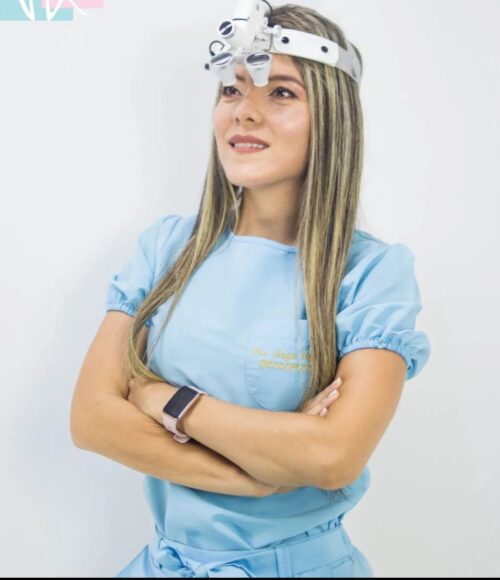
Dra. Angie Aguiar
Orthodontic cases from our clinic


Individual clinical case results. Photographs are shown without retouching teeth or tissues. Results vary according to each patient’s condition and treatment.
Frequently asked questions about orthodontics
Are orthodontics and braces the same thing?
Orthodontics is the specialty that studies and treats tooth position and the bite. Braces are one of the appliances used; aligners and other tools are also available.
Is Invisalign the same as any clear aligner?
No. Invisalign is a brand. We also use Smartee and Colombian-made alternatives; the proposal should identify the system and what is included.
Can adults have orthodontic treatment?
Age alone does not determine suitability. Teeth, gums, bone support, restorations and objectives must be assessed to propose an individual plan.
How long does treatment with braces or aligners take?
Duration is estimated after assessing the case. It depends on the movements, tissue response, checkups and compliance with instructions. No system is guaranteed to be faster for every patient.
Can I have orthodontic treatment if I have periodontal disease or bone loss?
Tell the team and have an assessment. Periodontal disease may need to be treated and stabilised before movements begin, with joint checkups throughout treatment.
Yes, in certain cases. Periodontal disease must first be treated and controlled. The periodontist and orthodontist then assess bone support, tooth mobility and the movements needed to decide whether treatment can begin.
Self-ligating brackets may be an option within that individual plan. Forces adapted to tooth support, good hygiene, periodontal maintenance and checkups during orthodontics are required. The appliance does not replace disease control.
Do retainers treat bruxism?
Their main purpose is to maintain the achieved tooth position. They do not automatically replace a splint or a bruxism assessment; the professional determines which appliance you need.
Can I choose any aligner brand?
You can express preferences and compare proposals, but the orthodontist must confirm the suitability of the system and plan. Availability is checked at the clinic when booking.
General patient information: clear aligners and retainers, from the American Association of Orthodontists. Treatment selection takes place at the consultation.
What the scientific evidence supports
This information distinguishes appliance features from outcomes that depend on diagnosis and follow-up. These studies guide the explanation of treatment.
Self-ligating braces: hygiene, roots and duration
The 2024 review found advantages in plaque and bleeding, with similar results in other indicators. The 2016 meta-analysis found an advantage for self-ligating brackets in upper central incisors, with no significant differences in the other incisors analysed. The 2025 tomography review mainly examined aligners versus fixed appliances and should not be presented as direct proof of self-ligating superiority. The 2025 multicentre trial also found no significant duration difference in adolescents treated without extractions. Earlier comparisons also reported shorter treatment with self-ligating brackets. Interpretation depends on each study’s design and population; these findings cannot establish which system will be superior for a particular patient.
- Periodontal health with conventional and self-ligating brackets: systematic review and meta-analysis (2024).
- Root resorption with aligners and fixed appliances: tomography-based meta-analysis (2025).
- Outcomes and duration with fixed appliances: multicentre randomised clinical trial in adolescents (2025).
- EFP clinical guideline for stage IV periodontitis: orthodontic treatment and follow-up.
- World Workshop consensus: periodontal conditions and traumatic occlusal forces (2018).
- Harradine (2001): clinical comparison of self-ligating and conventional bracket efficiency.
- Yi and colleagues (2016): systematic review and meta-analysis of root resorption with self-ligating and conventional brackets.
- Maizeray and colleagues (2021): systematic review and network meta-analysis of conventional, active self-ligating and passive self-ligating brackets.
Contact us to discuss your case and treatment
Tell us about your needs and preferred city. Our team will contact you to arrange your consultation.
Follow our social media and get to know us

Clinical team
Dra Johanna Calderón
Periodontics and dental implants specialist. Our clinical team provides comprehensive care: dental implants, periodontics, smile design, root canal treatment and general dentistry.
We care for patients from Colombia and abroad and explain an individual plan based on their diagnosis.