Dental implants in Bogota - Ibague - Cali - Medellin - Pereira - Barranquilla and Cartagena
What are dental implants?
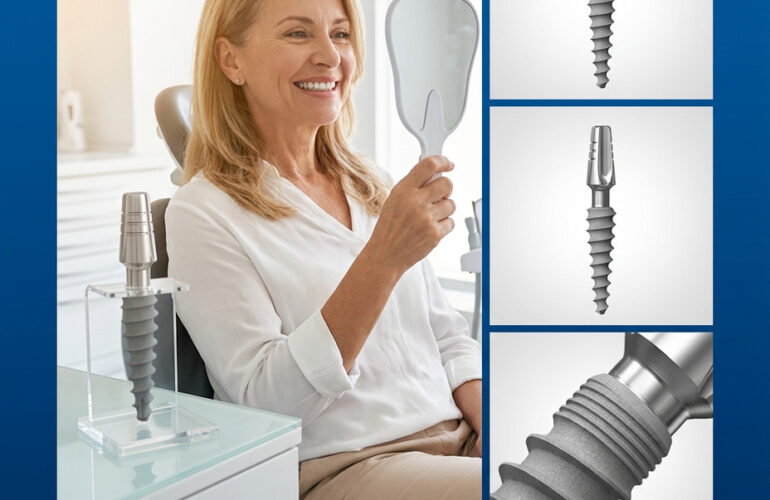
With the dental implant surgery procedure, replace lost parts with metal bolts that look like screws that are biocompatible with human tissues and replace teeth that were lost or damaged over time. The teeth rehabilitated on the implants have the same characteristics and comply with the same function as a natural tooth. This dental implant treatment allows patients to have an alternative for replace permanently the roots of teeth that do not function in fixed prostheses or in prostheses that are not stable.
The protocol for a dental implant surgery depends on the implant types and the condition of the maxilla and mandible. The greatest quality of dental implants is that they allow for a treatment predictable over time and that allows to have a most suitable support For teeth that are rehabilitated on these implants, we handle different types to always provide a solution for our patients.
How do you know if you can get a dental implant?
Initially what is done is a clinical assessment where it is observed with the help of diagnostic Imaging the current status of the patient and the bone condition and it is verified whether it is possible to implant a new piece in it.
On the other hand, it is also valued with the periodontal condition and occlusal of the patient in general where the dental support tissues or implants. If you have any disease associated with this, you must undergo prior treatment to cure or stabilize it. As for the occlusion That is to say, the way the patient bites must ensure that the area to be implanted receives forces no greater than those appropriate.
What can I do if I can't get a dental implant?
If in some cases the conventional implant cannot be placed, a alternative is strategic implantology which allows us to provide solutions to different cases that have been ruled out by conventional implantology..
Why get a dental implant?
Dental implants are placed using a surgical technique in the jaw or maxilla where they replace missing roots. The material from which the implants are made Dental implants are made of titanium. Material that is biocompatible with the human body and which osseointegrates or fuses with human bone, this material prevents the tooth from decaying as can happen with your own teeth, a dental implant does not generate noise, It does not move, nor does it cause damage to the bone as if it can be generated by a fixed denture or a bridge.
Types of dental implants
Once your gums heal, you will have more impressions made of your mouth and remaining teeth. These Impressions are used to make the crown, the real-looking artificial tooth. The crown cannot be placed until the jaw is strong enough as to allow the use of the new tooth.
You and your dentist can choose artificial teeth that are removable, fixed, or a combination of both:
Conventional Dental Implants:
This type of implant is the most common, ideal for people with sufficient bone volume, better known as biphasic implantology, it consists of two phases, the first is the placement of the implant and 4 months later when the implant has osseointegrated with the bone, the crown can be placed on the implant, only in some cases immediate loading can be performed depending on the level of torque that the implant allows at the time of surgery, but it is not common that it can be performed, in this type, a artificial tooth is screwed or cemented permanently to an abutment for a single implant. The tooth can’t withdraw for cleaning or sleeping. Most of the time, Each crown is attached to its own dental implantHowever, because implants are exceptionally strong, it is possible to replace several teeth with a single implant if they are connected together.
Description: Immediate loading implants, also known as implants in cortical bone, are a viable option for patients with significant bone loss, eliminating the need for additional grafts. This method allows for the placement of a temporary fixed prosthesis on the same day of surgery.
Advantages of immediate loading implants:
- Immediate results: Ideal for those who want fast results and have adequate bone structure.
- Less Waiting Time: Immediate loading significantly reduces the waiting time for a functional denture.
- Fast recovery: It allows you to enjoy functional teeth from day one, promoting a faster recovery.
Success stories:
- Alexis y Richard: They performed implants on some teeth.
- Clara Mayorga: She underwent a total prosthesis on implants.
For more details, you can read the full article (here)
They are specialized implants, used for the upper jaw in cases where bone loss is considerable and bone grafts are not needed.. (See full article)
The choice between immediate, conventional or zygomatic loading depends on several factors, such as the state of the jawbone and how quickly the patient wants to achieve results. Both types of implants offer a long-lasting solution, restoring the functionality and aesthetics of the smile.
Removable dental prosthesis:
This type is similar to a removable denture conventional and can be a partial or complete denture. It contains artificial white teeth surrounded by a pink plastic gum. It is placed in a metal structure that is firmly fixed to the implant abutment, and locks securely into place. It can be removed with ease of repairs or daily cleaning.
Immediate Loading Dental Implants (Strategic Implants) and Conventional Implants: Comparison:
Dental implants can be classified into two types according to the recovery time and placement of the prosthesis: immediate loading and conventional.
Benefits of Dental Implants in Colombia
Dental implants in Colombia offer an advanced and long-lasting solution to replace missing teeth. Made of biocompatible materials such as titanium, these implants integrate with the jawbone, providing stability and strength. Benefits include improved chewing function, preservation of bone structure, and an aesthetic and natural smile.
Additionally, Colombia is known for its excellent dental care at competitive prices compared to other countries. This allows international patients to choose Colombia as their destination for dental treatments, combining quality and affordable costs. With dental implants, patients not only regain their smile, but also their confidence and comfort in everyday life.
Dental implants may be right for you if you have any of these conditions:
Are there risks in dental implant surgery?
Like any surgery, dental implant surgery can pose health risks. However, problems are very rare and if they do occur, they are mostly minor and easy to treat.
The risks include:
What problems can arise when placing a dental implant?
Hay different types of implants and not all are of the same quality, it is necessary that you inform yourself very well because some treatments that are offered do not include all the processes that involve Placing a dental implant, such as rehabilitation of this and the adjuncts that are needed to be successful in the process.
How should you prepare for dental implant surgery?
To perform one or more implants, prior planning is required. This may include the need for the intervention of several specialists for the process, since this procedure is surgical and the patient must undergo a comprehensive assessment Before performing the procedure, assessments include:
Comprehensive Dental Assessment
Clinic history
Treatment Plan
To control pain during surgery, the options for anesthesia are local anesthesia, sedation, or general anesthesia. This will be evaluated on a case-by-case basis and it will be determined which option is best for you. The specialist will tell you what you can eat and drink before surgery based on the type of anesthesia you will receive. If sedation or general anesthesia is used, you will have to rest for the rest of the day after surgery.
Procedure for placing a dental implant
Below we will mention the general process to place a dental implant:
- The first thing is to make a Valuation which has NO COST and it is done via WhatsApp. You share with us the information of your case, photos, panoramic x-rays and if possible a CT scan, based on this information we will provide a Possible treatment and budget which must be confirmed in a face-to-face appointment. This second assessment has a cost which will be payable to the treatment. For this first face-to-face assessment appointment, it is an essential requirement to have the Computed axial tomography so that the specialist can verify the general condition and clinically evaluate the patient, the patient is then explained the treatment to follow.
- The surgery schedule is then agreed with the patient. It is important to remember that through our ally ADDI offers the possibility of financing the dental implant for pay in installments.
First phase: The Bolt
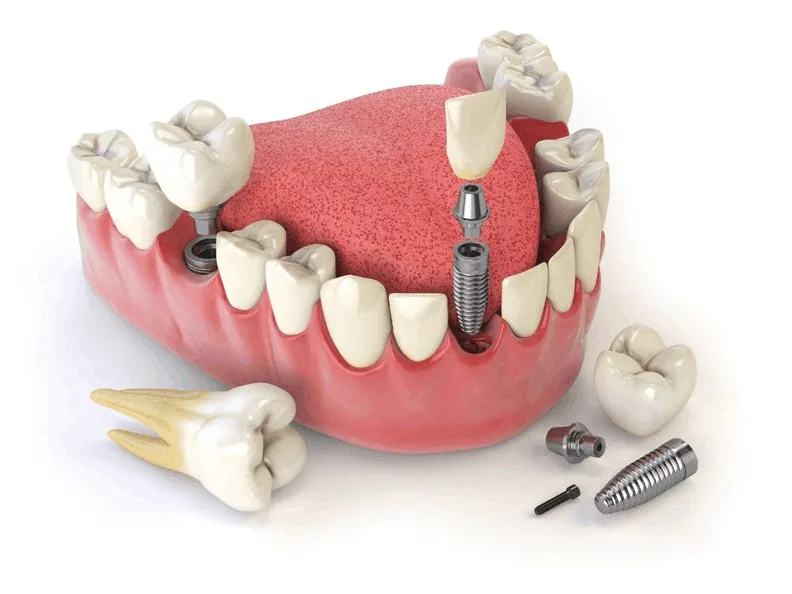
- First a incision in the gum where the bone is exposed, a hole is made and the bolt is put in, which is like a type of elongated screw that fits into the bone and acts as a substitute for the tooth root.
- Later on this bolt another smaller piece is screwed on called abutment or pillar, which is the part that will help hold the crown. This is a simple intervention which can last approximately 30 minutes, but may increase if more than one implant is to be placed.
After implant surgery, common discomforts related to this procedure may be experienced, such as:
You will need medication and antibiotics to manage pain after surgery, and you should have a soft diet for the first few days.
Second phase: The Crown
- The crown is a component that mimics the natural color and shape of the tooth, in order to place this component on the dental implants it is necessary to wait for the formation to occur Osseointegration between the implant, bone and gumThe time needed for this integration varies from person to person, but is usually between 3 to 6 months. During this time, you need to follow the hygiene recommendations indicated by the professional to avoid complications and for the process to be successful, in the meantime a type of temporary denture to improve the appearance. The specialist in this phase makes an incision again on the gum to expose the implant, fixes the abutment to the implantIf necessary, the gum is sutured without covering the abutment and left for two weeks before placing the artificial tooth.
Financing options can also be key in cost management. If you wish to evaluate this option, write to us so we can provide you with different alternatives.
Expected results of dental implant surgery
Most of this surgery has a high success rate. However, in In some cases the bone fails to osseointegrate with the implantFor example, habits such as smoking can contribute to implant failure.
If the implant does not fuse to the bone it must be removed, cleaned and approximately After three months you can try to place it again.
How to care for dental implants
To keep a implant in good condition, it is very important that you keep in mind that the proper hygiene In these new teeth it must be essential, because as with natural teeth, they can suffer different pathologies If you do not take proper care, please note that:

Conventional dental implants at our clinics
We offer consultations for conventional dental implants at these clinics. Check each location, its team and appointment availability; the treatment plan is confirmed after a clinical evaluation.
Ibagué
Bogotá
- Dental clinic in Bogotá, Dalí Medical Center
- Chapinero Clinic Medical Unit 48
- Usaquén Dental Clinic – El Bosque Building
- Dental Clinic Bogotá North Access Building
- Dental Clinic Chicó Medical Center 99
- Dental Clinic Forma 97 Building
- North Dental Clinic – Cedritos