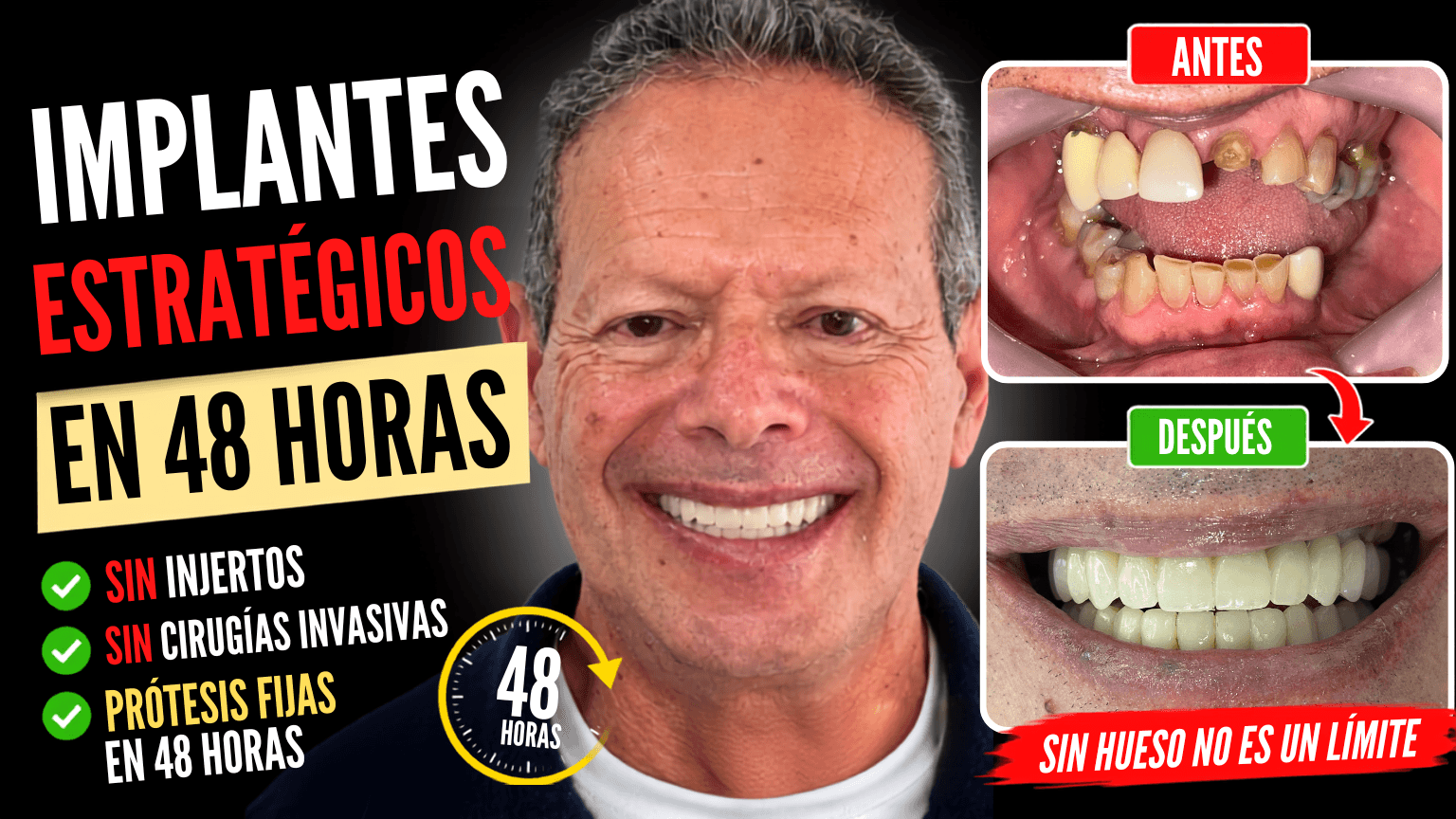
Strategic corticobasal implant dentistry in Colombia
Fixed teeth using strategic implants without bone grafts
Strategic implant dentistry allows one, several or all of the teeth to be rehabilitated using implants that seek anchorage in areas of cortical bone. The protocol does not use bone grafts and can be indicated both in patients with bone loss and in those who, despite having bone available, want less invasive surgery and fixed teeth in 24 to 72 hours, as long as the clinical assessment and 3D CT scan confirm that it is indicated.
Within this protocol, one or a few teeth receive their initial fixed rehabilitation in approximately 24 hours, while full-arch prostheses are delivered in approximately 72 hours. Early loading and splinting are an essential part of the treatment.
These times correspond to the first fixed rehabilitation and do not mean that the biological response or adaptation to the treatment has ended. The indication, the number of implants, the times and the materials are determined individually.
What are strategic implants?
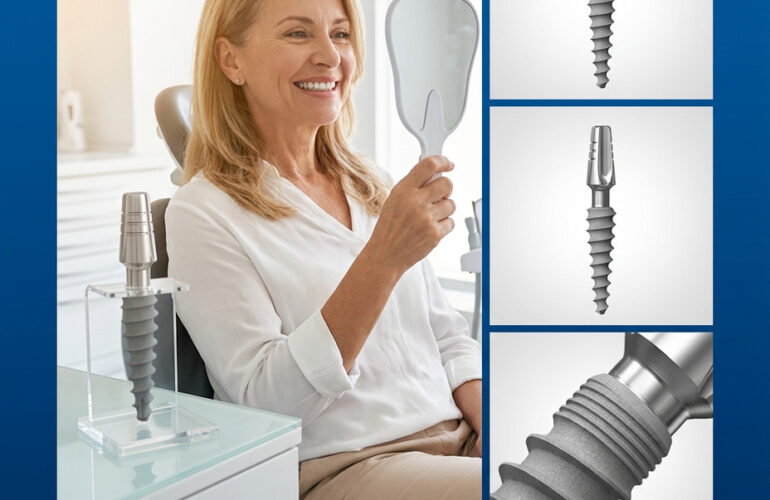
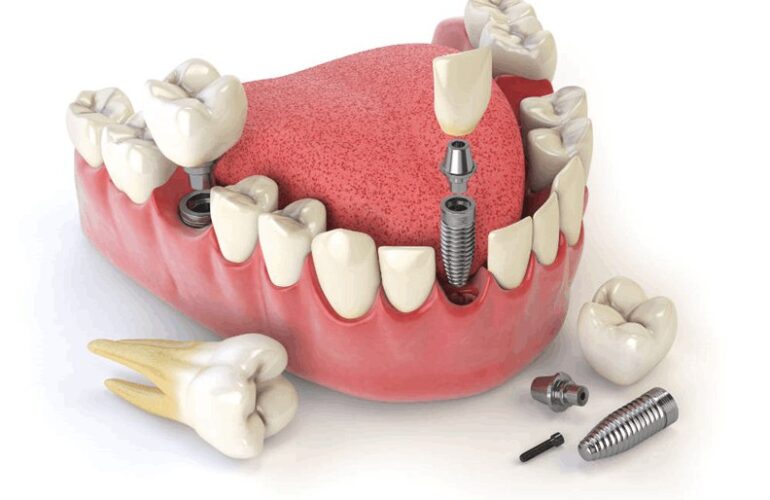
Strategic implants, also known as corticobasal implants, are part of an immediate loading protocol. Its planning seeks to take advantage of areas of cortical bone, a dense and resistant structure, to obtain stability from the moment of surgery and connect and splint the implants using a fixed prosthesis within the first 24 to 72 hours.
Unlike protocols that first rebuild bone volume through grafting, strategic implant dentistry is designed to use available anatomical structures and cortical anchorage points. This protocol does not incorporate bone grafts or sinus lifts as a prior phase of treatment.
The implants are selected and distributed according to the anatomy of each patient and the design of the future prosthesis. The goal is not only to place implants, but to create a stable rehabilitation that appropriately distributes forces during function.
This does not mean that everyone can receive the treatment. The indication depends on the anatomy observed in the 3D CT scan, the bite, the condition of the tissues, the presence of infections, the medical history and the possibility of achieving an appropriate biomechanical distribution.
Main features
- Protocol designed without bone grafts or sinus lifts.
- Immediate loading and splinting mandatory within the protocol, using crowns or fixed prostheses delivered in 24 to 72 hours.
- Usually placed without lifting flaps when the tooth is already absent, which reduces tissue trauma.
- Alternatives for single-tooth, partial and full-arch treatments.
- Planning through clinical assessment, panoramic X-ray and 3D CT scan.
- First fixed rehabilitation usually made in PMMA.
- Permanent single crowns in zirconia; in full-arch prostheses, subsequent definitive rehabilitation in zirconia, lithium disilicate or resin, according to the indicated design.
- Joint study of surgery, prosthesis, aesthetics, function and bite.
- Clinical follow-up and long-term maintenance.
What is cortical anchorage?
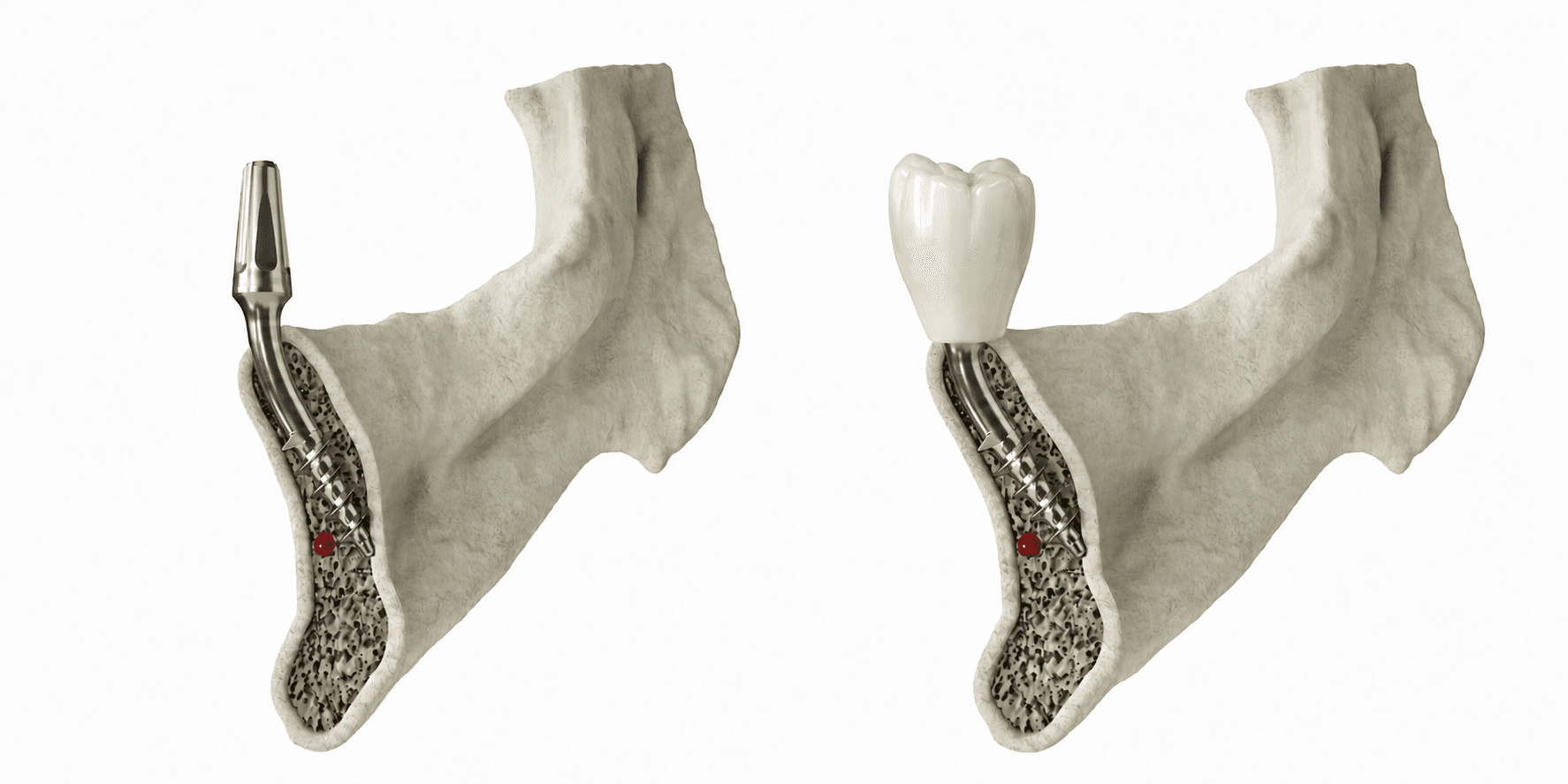
The bone does not have the same characteristics in all areas of the jaws. Cortical bone corresponds to denser areas that can offer support points for certain implant designs. Strategic implant dentistry studies these structures to establish a distribution that allows stability and control of rehabilitation forces.
Depending on the anatomy, the plan may consider different lengths, diameters, angulations and anchoring areas. In the protocol used by the clinic, pterygoid implants are usually incorporated as part of the posterior support in full-arch rehabilitations. Zygomatic implants are reserved for rare cases of extreme bone atrophy where strategic implants alone do not offer the necessary support; Most cases can be resolved only with strategic implants.
Selection should not be made solely because an x-ray appears to show “limited bone.” 3D CT scan allows studying the available volume, the cortices, the maxillary sinuses, the inferior alveolar canal, the nasal passages and other structures relevant to planning.
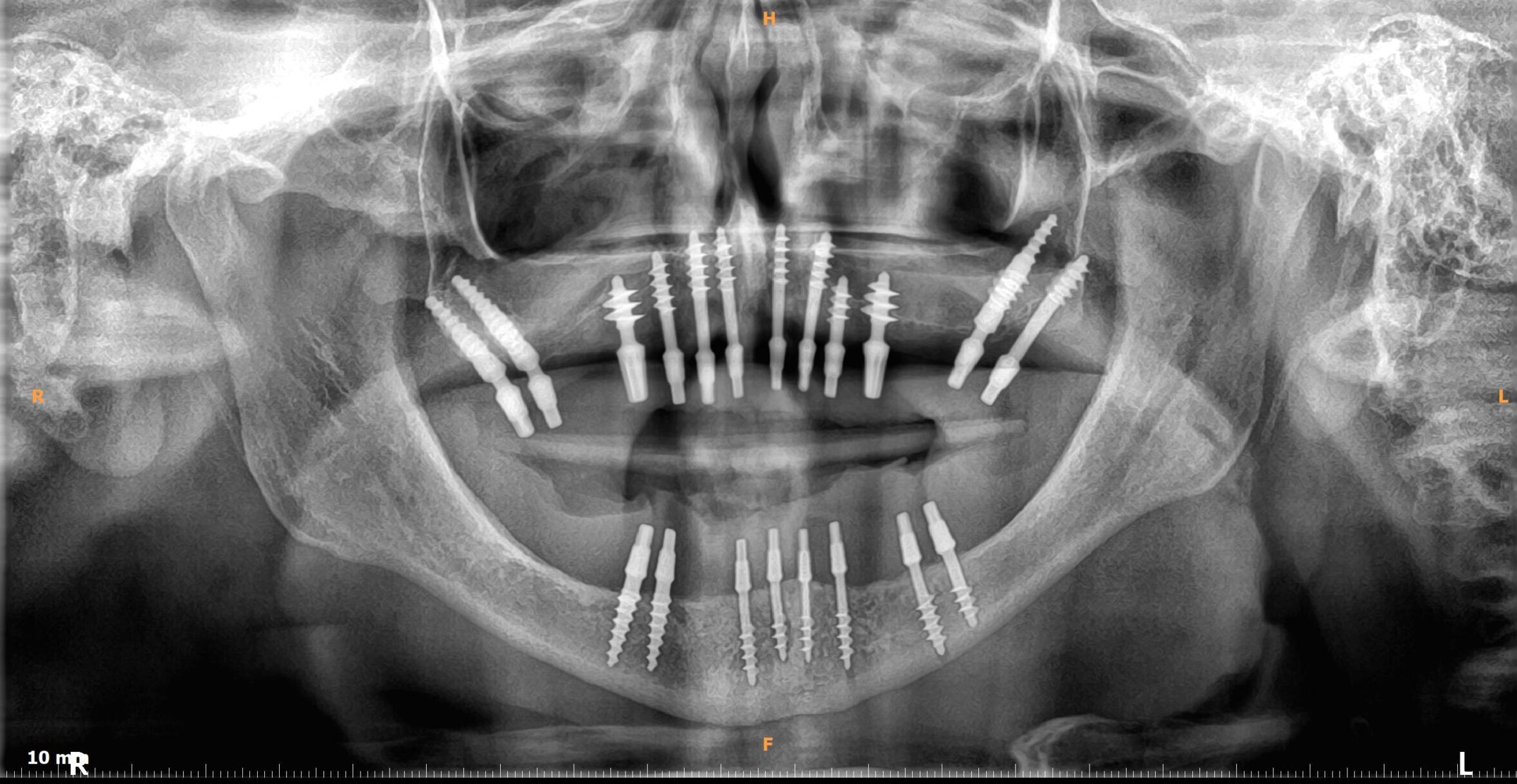
Panoramic x-ray used to evaluate the distribution and anchorage points of strategic implants.
Strategic implants versus conventional implants
Both approaches may be appropriate when used with correct indication. The difference does not consist in stating that a system is better for all people, but in understanding how each protocol seeks stability, what phases it needs and which alternative best responds to the anatomy and the rehabilitation objective.
| Aspect | Strategic implants | Conventional implants |
|---|---|---|
| Type of anchorage | They seek support in areas of cortical bone and in strategic points defined through planning. | They depend mainly on the volume and quality of the alveolar bone available in the area of the tooth. |
| bone grafts | The strategic protocol does not incorporate bone grafts or sinus lifts as a previous phase. | They may require grafts or sinus lift when the available bone volume is not sufficient. |
| Implant loading | Immediate loading and splinting with crowns or fixed prosthesis in 24 to 72 hours are essential within the protocol. The prosthesis joins the implants and limits micromovements during the initial phase. | Immediate loading can only be considered when no bone grafts are performed and when the required torque and stability are verified during surgery. Therefore it cannot be guaranteed before the procedure; many cases need lazy loading. |
| Design and cervical surface | The systems used have a smooth neck, designed to reduce biofilm retention in the transition zone and facilitate hygiene. This design seeks to reduce the risk of peri-implant inflammation, although it does not replace hygiene nor does it allow us to affirm that the risk is zero. | Many conventional systems have different surfaces and connections. Prevention of inflammation and peri-implantitis depends on prosthetic fit, hygiene, follow-up visits and management of risk factors; The accumulation of biofilm around the connection can promote complications. |
| Surgical approach | When the tooth is already absent, placement is usually carried out without raising flaps: the planned point is directly accessed. This better preserves tissues and reduces surgical trauma. | It often requires raising a flap to expose the bone. In cases planned with guided surgery, a flapless approach can also be performed. |
| Inflammation and recovery | By not raising flaps to place the implants, most patients have little inflammation and do not develop bruising from the placement. Discomfort usually decreases significantly during the first 24 hours. Extractions or the exceptional use of zygomatic implants can cause greater inflammation or bruising. | Recovery depends on flap extension, extractions, bone procedures, and individual response. More inflammation and bruising may occur when the tissues are extensively intervened. |
| First rehabilitation | It can be delivered in approximately 24 hours in certain unit or partial treatments and about 72 hours in full-arch rehabilitations. | The time varies and some cases require a healing phase before installing the prosthesis. |
| Bone available | It can allow studying cases with bone atrophy taking advantage of cortical and other anatomical areas. | You generally need adequate bone volume around the site where the implant will be placed. |
| Prosthetic planning | The distribution of the implants and the union through the prosthesis are essential to control the forces from the initial phase. | It also requires prosthetic planning, although the loading and healing protocol may be different. |
| Initial prosthesis | It is usually manufactured in PMMA to begin the functional and aesthetic adaptation. | A fixed or removable provisional prosthesis can be used depending on the treatment. |
| Diagnosis | It requires clinical evaluation, prosthetic study, bite analysis and 3D CT scan. | It also requires individual diagnosis and clinical and three-dimensional planning. |
This comparison is general. No technique is appropriate for everyone. The decision should be based on the diagnosis, anatomy, tissue condition, bite, expectations and experience of the treating team.
Dental implants for patients with limited bone
One of the reasons some patients seek strategic implants is that they have previously been told that they do not have enough bone to receive conventional implants or that they would need bone grafts, sinus lifts or other procedures before teeth are placed.
Strategic implant dentistry can allow the study of some cases of bone atrophy because it seeks to take advantage of areas of cortical bone and anatomical structures different from the alveolar bone usually used by conventional implants.
However, the expression “boneless implants” must be interpreted correctly. No implant can be placed without an anatomical structure capable of providing anchorage. What changes is the strategy used to locate and take advantage of the available bone.
A panoramic x-ray offers a first orientation, but it does not allow us to establish by itself whether a person is a candidate. To analyze the case, a 3D CT scan is required to study, among other aspects:
- The volume and distribution of available bone.
- The areas of cortical bone that could be used.
- The location of the maxillary sinuses and nasal passages.
- The path of nerves and other anatomical structures.
- The presence of infections, injuries or teeth with an unfavorable prognosis.
- The relationship between the upper jaw and the mandible.
- The space available to design the rehabilitation.
- The possibility of properly distributing bite forces.
Important: Most cases diagnosed with “limited bone” can be studied and resolved through strategic anchoring, after reviewing images, general health, tissues, bite, and prosthetic needs. Some single situations in the areas of teeth 16, 17, 26 and 27 may present greater difficulty when the floor of the maxillary sinus is descended and only those teeth need to be replaced; 3D CT scan allows us to establish what support exists and what design is possible.
Why doesn’t the protocol require bone grafts?
Bone grafts are used in certain conventional treatments to increase bone volume before or during implant placement. Depending on the extent of the procedure, they may require a healing period before continuing with rehabilitation.
The strategic protocol has a different approach: instead of previously reconstructing the lost alveolar bone, it seeks to identify cortical areas that can offer stability for the implants. For this reason, Strategic implant dentistry does not incorporate bone grafts or sinus lifts as a previous stage.
The absence of grafts does not mean that the treatment is simple or risk-free. Placement requires knowledge of the anatomy, three-dimensional planning, adequate selection of implants, control of angulations and prosthetic rehabilitation capable of joining them and distributing forces correctly.
In cases of severe atrophy additional strategies may be needed. Depending on the anatomy, the team can study pterygoid, zygomatic implants or other anchorage points. These alternatives have specific indications, techniques and risks that must be explained before the procedure.
Possible differences compared to treatment with bone reconstruction
- You can avoid surgery intended exclusively to obtain or place a graft.
- It can reduce the number of surgical phases in indicated cases.
- It seeks to connect an initial fixed rehabilitation during the immediate loading period.
- You do not need to wait for the consolidation of a graft to begin the initial prosthetic phase.
- It requires careful biomechanical planning from the beginning.
- It does not eliminate the need for follow-up visits, adaptation and maintenance.
The decision between a strategic treatment, a conventional treatment with graft or another alternative should be made after comparing benefits, limitations, risks, times, costs and individual prognosis.
Who can be a candidate for strategic implants?
Strategic implants can be studied in patients who need to replace one, several or all teeth and are looking for fixed rehabilitation. They are not only intended for people with limited bone: they can also be indicated when there is bone available but the patient wants less invasive surgery, a faster recovery and fixed teeth in 24 to 72 hours, without waiting several months for the initial prosthetic phase.
They can also be an alternative when there is bone loss, grafts have been indicated, a removable prosthesis is unstable or a previous treatment did not work as expected. The indication depends on the clinical history, anatomy, 3D CT scan, tissue status, bite, expectations and the possibility of fully applying the anchoring, immediate loading and splinting protocol.
Among the situations that may motivate an assessment are:
- Loss of one or more teeth.
- Complete absence of teeth in one or both jaws.
- Teeth with advanced mobility or unfavorable prognosis.
- Severe periodontal disease that has compromised dental support.
- Removable prostheses that are unstable, uncomfortable or have poor retention.
- Bone atrophy that makes conventional treatment difficult.
- Previous indication for bone grafts or sinus lift.
- Need to rehabilitate a full arch with a fixed prosthesis.
- Failures or complications of previous implant treatments that should be studied.
- Patients who travel from other cities or countries and need to plan the treatment phases.
- People who, despite having enough bone, prefer a usually flapless approach and a faster recovery.
- Patients who want a fixed solution in a few hours and understand that they must comply with diet, hygiene, adjustments and subsequent follow-up visits.
- Severe atrophy of the upper jaw that requires studying special supports.
Age alone does not determine whether a person can receive implants. The general state of health, control of existing diseases, anatomy, hygiene, medications, habits and the ability to attend check-ups are more important.
In young patients it must be confirmed that jaw growth has ended. In older adults, general health, medications, functional status, and the ability to maintain adequate hygiene are especially valued.
Advanced periodontal disease does not automatically exclude this treatment. When the affected teeth must be extracted, the compromised areas are cleaned and the implants are anchored in deeper cortices, away from the superficial focus. Bruxism does not constitute a contraindication in itself: it must be recognized to design the distribution, the material and an occlusion with controlled contacts that protects the rehabilitation.
Characteristics necessary for responsible treatment
In addition to the anatomical conditions, the patient must report all his or her history, follow the prescribed medication, temporarily modify the diet, maintain careful hygiene, and attend the indicated check-ups. You must understand the stages, care, limitations and the difference between the initial fixed prosthesis and definitive rehabilitation.
Expectations should be realistic regarding timing, aesthetics, fit, maintenance, and the possibility of needing adjustments. The candidacy cannot be confirmed only with a photograph or a message: Remote assessment guides, but the final decision requires clinical review and study of diagnostic images.
The candidacy is confirmed after review
- Clinical history and medical history.
- Medications, allergies and previous surgeries.
- Clinical examination of teeth, gums and tissues.
- panoramic X-ray and 3D CT scan.
- Bite status and functional forces.
- Aesthetic and functional expectations.
- Type of prosthesis that the patient needs.
- Possibility of maintaining long-term follow-up visits and hygiene.
Situations requiring special evaluation
Some diseases, medications or habits do not automatically exclude treatment, but may modify risk, healing, planning or safety measures. It is essential to inform the team about all the history, even if it appears to be unrelated to oral health.
Diabetes
Patients with diabetes can be evaluated for implants when the disease is controlled. The professional can request recent results, such as glycosylated hemoglobin, and the treating physician’s opinion. Inadequate control can increase the risk of infection and affect healing.
Hypertension and cardiovascular diseases
Blood pressure must be controlled. It is necessary to report a history of heart attack, arrhythmias, heart failure, strokes, cardiovascular procedures and all medications used.
Anticoagulants and antiplatelets
Medications that modify coagulation should not be discontinued by the patient. The treating team will establish whether you need tests or communication with the doctor who prescribed them and will define the corresponding measures.
Osteoporosis and bone medications
Current or previous use of bisphosphonates, denosumab, and other medications related to bone metabolism should be reported. The route of administration, dose, duration and the disease treated influence the risk assessment.
Smoking
Smoking can affect healing, increase the risk of complications, and harm the health of the tissues around implants. Consumption must be reported accurately. Reducing or stopping it may be part of the treatment recommendations.
Oncological treatments or immunological alterations
History of radiation therapy to the head or neck, chemotherapy, immunosuppression, and certain systemic diseases requires careful evaluation and, when appropriate, coordination with the treating physician.
Pregnancy
Elective surgical treatments and radiographic studies should be planned taking into account the pregnancy, its stage, and medical indications. The patient must inform if she is pregnant or there is a possibility of pregnancy.
Do not stop or modify medications on your own. Any change must be indicated by the responsible doctor or coordinated between the treating professionals.
Assessment, examinations and treatment planning
Treatment begins with a complete assessment. Although photographs, panoramic X-ray, and CT scan can allow initial remote guidance, definitive diagnosis needs to integrate in-person examination, medical history, imaging, and prosthetic analysis.
Medical record
Current and previous illnesses, surgeries, allergies, medications, tobacco use, bleeding history, previous dental treatments and any condition that may modify the procedure are reviewed.
Oral exam
The present teeth, gums, tissues, mobility, infections, prosthetic space, mouth opening, relationship between the jaws, hygiene and smile characteristics are evaluated.
panoramic x-ray
It allows you to obtain an overview of the jaws, teeth, some injuries and anatomical structures. It is useful for initial orientation, but does not replace three-dimensional study.
3D CT scan
CT scan allows you to analyze sections and reconstructions of the jaws, measure structures and study possible anchorage points. It is one of the fundamental elements to define whether the protocol can be performed and what type of implants should be considered.
Digital and prosthetic records
Depending on the case, photographs, intraoral scanning, impressions, bite records and other measurements may be performed. This data helps design the position, shape, size and functional relationship of the teeth.
Complementary exams
Depending on the medical history, a complete blood count, coagulation tests, glucose, glycosylated hemoglobin, kidney function or other studies may be requested. The opinion of the treating physician or anesthesiologist may also be required.
Plan presentation
After integrating the information, the proposed treatment, the alternatives, the estimated number of implants, the prosthetic phases, the materials, the times, the care, the risks and the treatment estimate are explained.
Useful information for an initial remote assessment
- Recent panoramic x-ray and 3D CT scan, if already available.
- Clear photographs of the smile and teeth.
- Description of the problem and the treatment you wish to consult.
- Medical history, medications and allergies.
- Information about previous dental treatments.
- City or country of residence and estimated travel dates.
Remote review allows preliminary guidance to be provided. The plan and treatment estimate are confirmed after the in-person assessment and complete study.
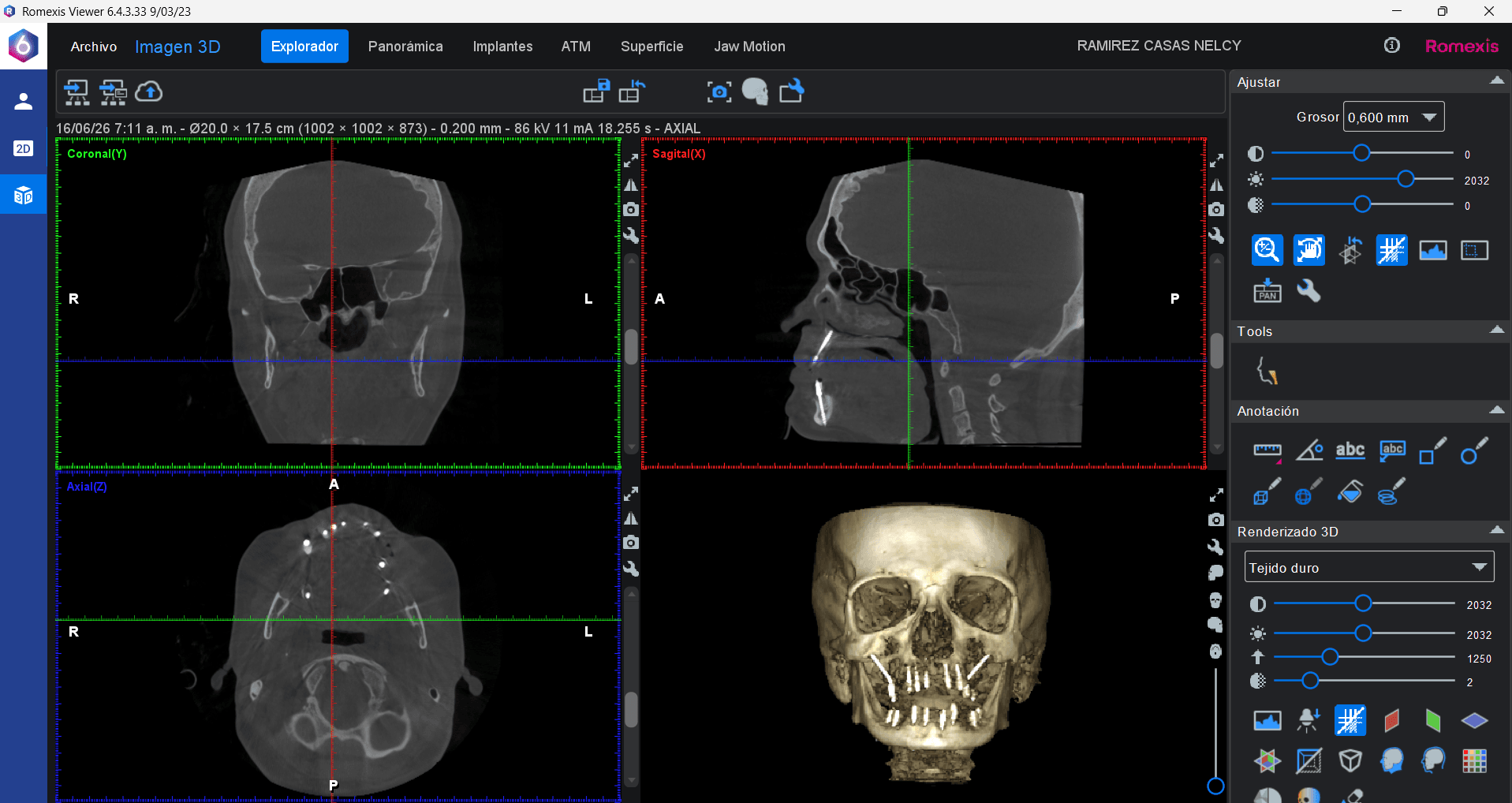
3D CT scan allows you to study the anatomy, measure the available structures and plan the possible anchorage points for the implants.
How is treatment with strategic implants performed?
The procedure is organized into clinical and prosthetic stages. The exact schedule depends on whether a single tooth, multiple teeth, an entire arch, or both jaws will be replaced, as well as the need for extractions, the condition of the tissues, and the complexity of the rehabilitation.
Assessment and diagnosis
Medical and dental history, medications, patient expectations, and diagnostic studies are reviewed. 3D CT scan allows you to analyze the anatomy and study possible anchorage points.
Surgical and prosthetic planning
Before surgery, it is determined which teeth can be saved, which should be extracted, how many implants might be needed, how they will be distributed and what type of rehabilitation will be carried out. Prosthesis planning is part of the treatment from the beginning.
Patient preparation
The team provides instructions on food, medications, hygiene, support and aftercare. When there are relevant diseases or medical treatments, complementary examinations or the opinion of the treating professional may be requested.
Surgery
On the day of the procedure, the indicated extractions, tissue management, and implant placement are performed according to the plan. When the patient has already lost his teeth, strategic implants are usually placed without raising flaps: the planned point is accessed directly with the lance. The number, design and location of the implants depend on the anatomy and the rehabilitation required.
The objective is to achieve the necessary stability and a biomechanical distribution that allows the initial fixed rehabilitation to be connected. If during the procedure the conditions encountered are different from those anticipated, the team may need to modify the plan for safety.
Records for prosthesis
After implants are placed, records are taken using intraoral scanning, impressions, photographs, bite records, or other techniques. This information is used to create the initial fixed prosthesis.
Installation of initial fixed rehabilitation
Within the protocol, the first rehabilitation of single-tooth or partial treatments is delivered in approximately 24 hours. In full-arch rehabilitations, the clinical and laboratory process is organized to install and splint the fixed prosthesis in about 72 hours.
These times are a reference and begin after surgery and correct recording. They can change depending on the complexity, tissue response, need for adjustments, laboratory, bite and clinical conditions of each patient.
Initial checks
During the follow-up visits, the healing, hygiene, bite, stability of the prosthesis and the patient’s adaptation are reviewed. When necessary, adjustments are made to reduce inappropriate contact or improve comfort.
Summary of the stages
- Clinical assessment and background review.
- panoramic X-ray and 3D CT scan.
- Surgical, functional and prosthetic planning.
- Examinations or medical concepts when indicated.
- Surgery, necessary extractions and implant placement.
- Taking records to make the prosthesis.
- Installation and adjustment of the initial fixed rehabilitation.
- clinical follow-up, hygiene and bite adaptation.
- Monitoring of implants and prosthesis.
- Subsequent planning of definitive rehabilitation when appropriate.
What does immediate loading mean?
Immediate loading means that the implants are connected and splinted using crowns or a fixed prosthesis within the first 24 to 72 hours. In the strategic implant dentistry protocol it is not an optional alternative: it is an essential phase. Cortical anchorage follows biomechanical principles similar to those of orthopedics and the prosthesis acts as a splint that joins the implants, distributes forces and limits micromovements during healing.
For this reason, treatment is only indicated when planning allows for completion of both placement and early loading and splinting. Initial rehabilitation is not only an aesthetic element: it is part of the biomechanical control of the protocol. This does not mean that the bone and tissues have finished healing within that period.
Immediate loading requires carefully respecting the bite, the consistency of the food and the clinical team’s instructions. Even if the patient has fixed teeth, during the initial phase the prosthesis should not be subjected to excessive forces.
Immediate loading does not mean
- That the healing has finished in 24 or 72 hours.
- That the patient can immediately eat any food.
- That all people receive the same number of implants.
- That all treatments use the same prosthetic design.
- That no further adjustments may be needed.
- That the initial rehabilitation is necessarily the definitive prosthesis.
- That the treatment is free of risks or complications.
The terms “teeth in 24 hours” or “teeth in 72 hours” refer to the installation and splinting of the first fixed rehabilitation, a mandatory phase when this protocol is applied. The case must be suitable to complete the comprehensive procedure; These times do not mean that the clinical and biological process has ended.
single-tooth, partial and full-arch treatments: fixed teeth in 24 to 72 hours
Strategic implant dentistry is not limited to rehabilitation of all teeth. Depending on the diagnosis, it can be used to replace a single tooth, several consecutive teeth, an entire arch, or both arches.
In this protocol, the installation of the crowns or the initial fixed prosthesis between 24 and 72 hours is an essential part of the treatment. This rehabilitation allows the implants to be connected and splinted so that they work as a joint biomechanical structure during the adaptation process.
The exact timeline depends on the extent of treatment, the number of implants, extractions required, bite records, and the complexity of the prosthesis. Therefore, although early loading and splinting are necessary within the protocol, not all treatments require the same laboratory time.
Replacing an anterior tooth or premolar
In indicated cases, a strategic implant can be placed to replace an anterior tooth or premolar. Planning must consider the three-dimensional position of the implant, the shape and volume of the gum, the available space, the bite and the aesthetic demands of the area.
In these treatments, the initial fixed crown is fabricated and delivered approximately within the first 24 hours to perform the splinting required by the protocol.
When the tooth is still present but has an unfavorable prognosis, the extraction, cleaning of the area and the position of the implant must also be planned. If the tooth has already been extracted and the tissues are healed, the procedure can be more direct, as long as the anatomy allows obtaining the planned cortical anchorage.
The initial crown allows for early recovery of the appearance and function of the tooth, but also serves as an adaptive restoration. During check-ups it may be necessary to modify its shape, color, contact with neighboring teeth, emergence profile or relationship with the bite before manufacturing the final zirconia crown.
Rehabilitation of a molar
Molars receive high forces and have a larger functional surface. Depending on the anatomy, available space and biomechanical design, your rehabilitation may require two strategic implants to better distribute the loads.
This need cannot be defined solely by observing the space of the missing tooth. It should be confirmed by diagnosis, CT scan and clinical evaluation of the available anchor points.
When the case allows the protocol to be applied, the initial fixed rehabilitation is also delivered approximately within the first 24 hours. Its design must carefully control the bite contacts to protect the implants and distribute forces during the adaptation period.
Replacement of several consecutive teeth
When several consecutive teeth are missing, a fixed prosthesis supported by strategically distributed implants can be designed. The number of implants is not determined simply by placing one for each missing tooth.
The planning considers:
- The extension of the space without teeth.
- The location and availability of cortical anchor points.
- The forces that that area receives during chewing.
- The relationship with the teeth of the opposite arch.
- The necessary stability and biomechanical distribution.
- The length and design of the fixed prosthesis.
- The presence of teeth that need to be extracted.
- The material planned for the initial and definitive rehabilitation.
In partial treatments, the initial fixed rehabilitation is usually fabricated and delivered within approximately the first 24 hours. However, the time may vary when multiple extractions, additional records, more extensive prosthetic design, or special bite adjustments are needed.
The prosthesis must join the implants and distribute the forces in a balanced way. Therefore, its function is not only to replace missing teeth: it also provides the splinting required to keep the set stable.
Rehabilitation of a full arch
When all the teeth in a jaw are missing or have an unfavorable prognosis, a complete fixed rehabilitation can be performed. The implants are distributed in different anchorage points to support a prosthesis that replaces all the teeth in the arch.
In the protocol used by the clinic, approximately 10 to 12 implants are placed in the upper jaw and between 8 and 10 implants in the lower jaw. As a minimum reference, 10 implants above and 8 below are planned.
The final amount depends on the anatomy, the size of the jaw, the distribution of the anchorage points and the biomechanical demands of the case. Larger jaws or certain prosthetic designs may require more implants. Therefore, it should not be assumed that all full-arch rehabilitations are resolved with four, six or an identical number of implants.
Pterygoid implants are usually incorporated in full-arch prostheses to obtain posterior support, according to the anatomy and planning protocol. Zygomatic implants are reserved for a small group of patients with extreme bone atrophy, when strategic implants and other anchorage points are not enough to resolve the case alone.
The creation of the complete fixed prosthesis requires integrating clinical records, establishing the vertical dimension, designing the position of the teeth, checking the bite and fabricating a structure that connects all the implants. For this reason, initial fixed rehabilitation of a full arch may require approximately 72 hours.
During this period, the patient attends the necessary tests and checks. The objective is to install a fixed prosthesis that not only allows the teeth to be recovered, but also splints the implants and distributes the forces between the different anchorage points.
Bimaxillary rehabilitation
Bimaxillary rehabilitation includes the treatment of the upper jaw and mandible. In addition to planning the implants for each arch, it is necessary to reconstruct the functional and aesthetic relationship between both.
Planning should consider:
- The vertical dimension.
- The relationship between the upper jaw and the mandible.
- Support of lips and facial tissues.
- The position and exposure of the teeth.
- The pronunciation.
- The shape of the smile.
- Mandibular movements.
- The distribution of bite contacts.
- The balance between the two prostheses.
These treatments may require more recordings, tests, and adjustments than a single-arch rehabilitation. Any modification made to the upper prosthesis influences the lower one and vice versa, so the two must be designed and tested as a set.
Initial fixed rehabilitation is generally delivered within the 72-hour protocol. However, the schedule can be adjusted when additional verifications are needed to achieve an adequate relationship between both arches.
After installing the prostheses, occlusion, comfort, pronunciation and force distribution should be carefully reviewed. These checks are especially important before the return trip of patients from other cities or countries.
Why do some treatments require 24 hours and others up to 72 hours?
The term does not depend only on the moment in which the implants are placed. It also includes the clinical and laboratory work necessary to manufacture a fixed rehabilitation adapted to the patient’s anatomy and bite.
single-tooth and partial treatments usually require fewer records and a smaller prosthetic structure, so they can be completed in approximately 24 hours.
Complete and bimaxillary rehabilitations require defining the position of multiple teeth, recovering the vertical dimension, checking the pronunciation, balancing the bite and manufacturing a structure capable of connecting all the implants. That’s why they may need approximately 72 hours.
These times correspond to the first fixed rehabilitation of the protocol. They do not mean that the bone and tissues have finished adapting or that the clinical follow-up, bite adjustments or the final prosthetic stage have been completed.
Factors that can modify the schedule
Although treatment is arranged to install initial fixed rehabilitation within the first 24 to 72 hours, the individual schedule may be influenced by:
- The anatomical complexity of the case.
- The number and location of teeth that need to be extracted.
- The presence of infections, injuries or root debris that must be cleaned.
- The number, position and distribution of the implants.
- The need to use additional anchor points.
- The extent of rehabilitation.
- Treatment of one or both arches.
- Inflammation primarily associated with extractions.
- The individual response of the tissues.
- The quality and accuracy of clinical records.
- The design of the smile and the position of the teeth.
- The need to recover the vertical dimension.
- The complexity of the bite.
- Phonetic and aesthetic tests.
- Additional adjustments identified during preparation.
- The organization of the laboratory and the availability of materials.
The stability observed during surgery and the distribution of the implants allow us to verify that the planned protocol can be developed adequately. If a condition different from that observed in diagnostic studies is found during the procedure, the team must make the necessary adjustments to protect the patient and maintain a safe biomechanical distribution.
The number of implants and the time are not defined by counting teeth
The number of implants is not determined solely by the number of missing teeth. The decision considers the anatomy, the anchorage points, the extension of the prosthesis, the bite forces, the material used and the need to achieve a stable biomechanical distribution.
Likewise, the processing time does not depend only on the number of implants. A single restoration can be ready in approximately 24 hours, while a complete or bimaxillary denture requires more registration, design, testing and checks before being delivered.
For this reason, the final number of implants, the prosthetic design and the schedule must be established individually after reviewing the clinical history, examination, CT scan and the functional and aesthetic needs of the patient.
Arrangement of treatment for traveling patients
Patients coming from other cities or countries must confirm their individual schedule before purchasing flights, arranging transfers, or making non-refundable accommodation reservations.
Although the initial fixed rehabilitation is planned within the first 24 to 72 hours, time must be reserved for testing, installation of the prosthesis, and checking of occlusion before the return trip. The team will indicate how many days the patient should stay depending on the extent and complexity of their treatment.
Strategic implants in full-arch rehabilitations
Complete restorations are aimed at patients who have lost all the teeth in an arch or whose remaining teeth cannot be preserved in a predictable manner. The objective is to install a fixed prosthesis supported by implants and recover function, stability and dental appearance.
Before deciding to extract the remaining teeth, their prognosis must be assessed. The indication for full-arch rehabilitation should not be based solely on the desire to finish treatment quickly. When there are teeth that can be preserved in a healthy and useful way, this possibility should be part of the clinical conversation.
In indicated cases, during surgery the necessary extractions can be performed and the implants placed within the same protocol. Subsequently, the required records are taken to manufacture the initial fixed rehabilitation.
The prosthesis must be designed considering:
- The distribution and angulation of the implants.
- The relationship between the upper jaw and the mandible.
- The space available for the teeth and the prosthetic structure.
- Lip support and facial appearance.
- The smile line and tooth exposure.
- The pronunciation and position of the tongue.
- The ease of carrying out hygiene.
- The distribution of forces during the bite.
- The initial and definitive rehabilitation materials.
In some patients, the prosthesis needs to incorporate a part that represents gingival tissue to compensate for the loss of bone and gum. In other cases it can be designed without added gum if the anatomy, space and position of the smile allow it. This is defined individually.
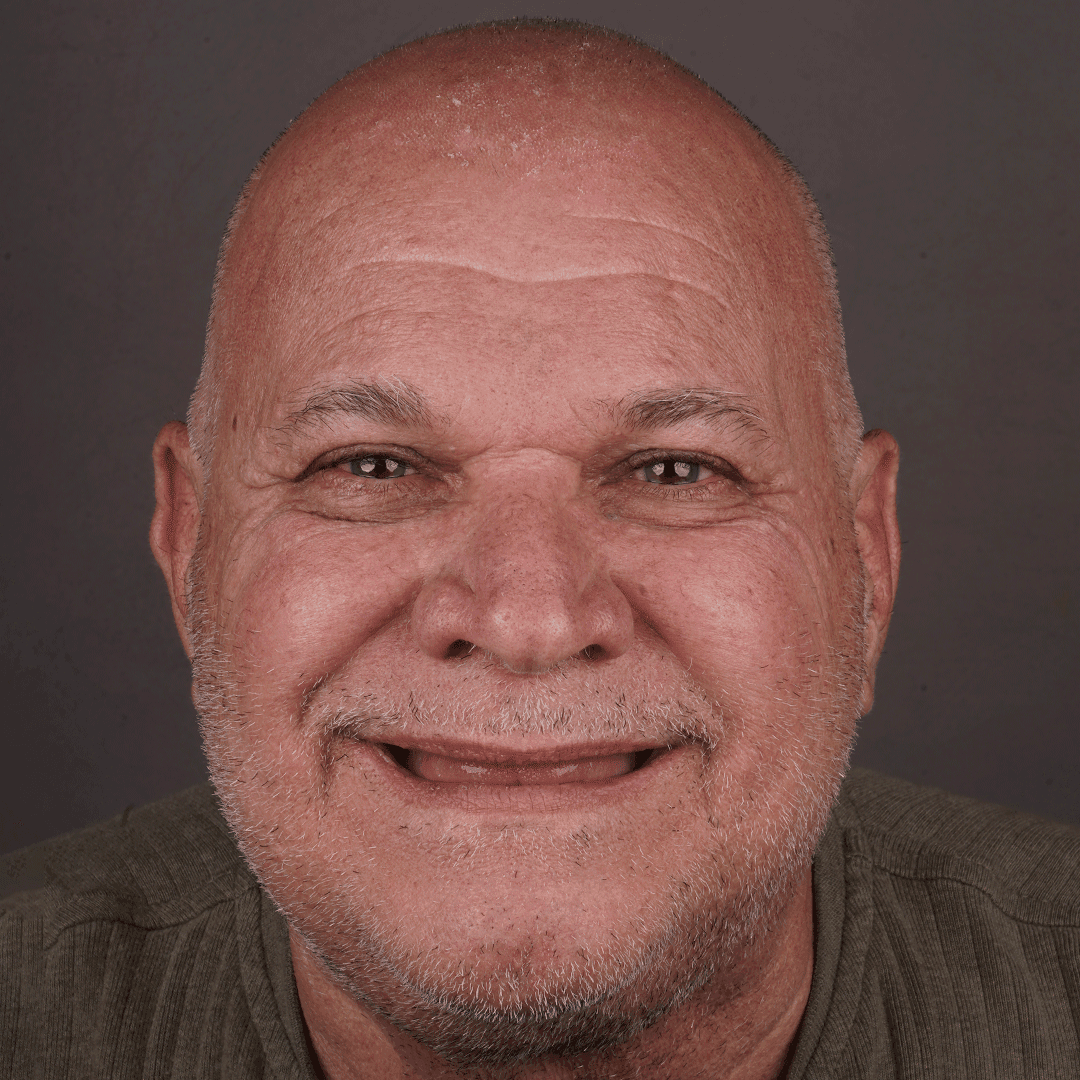
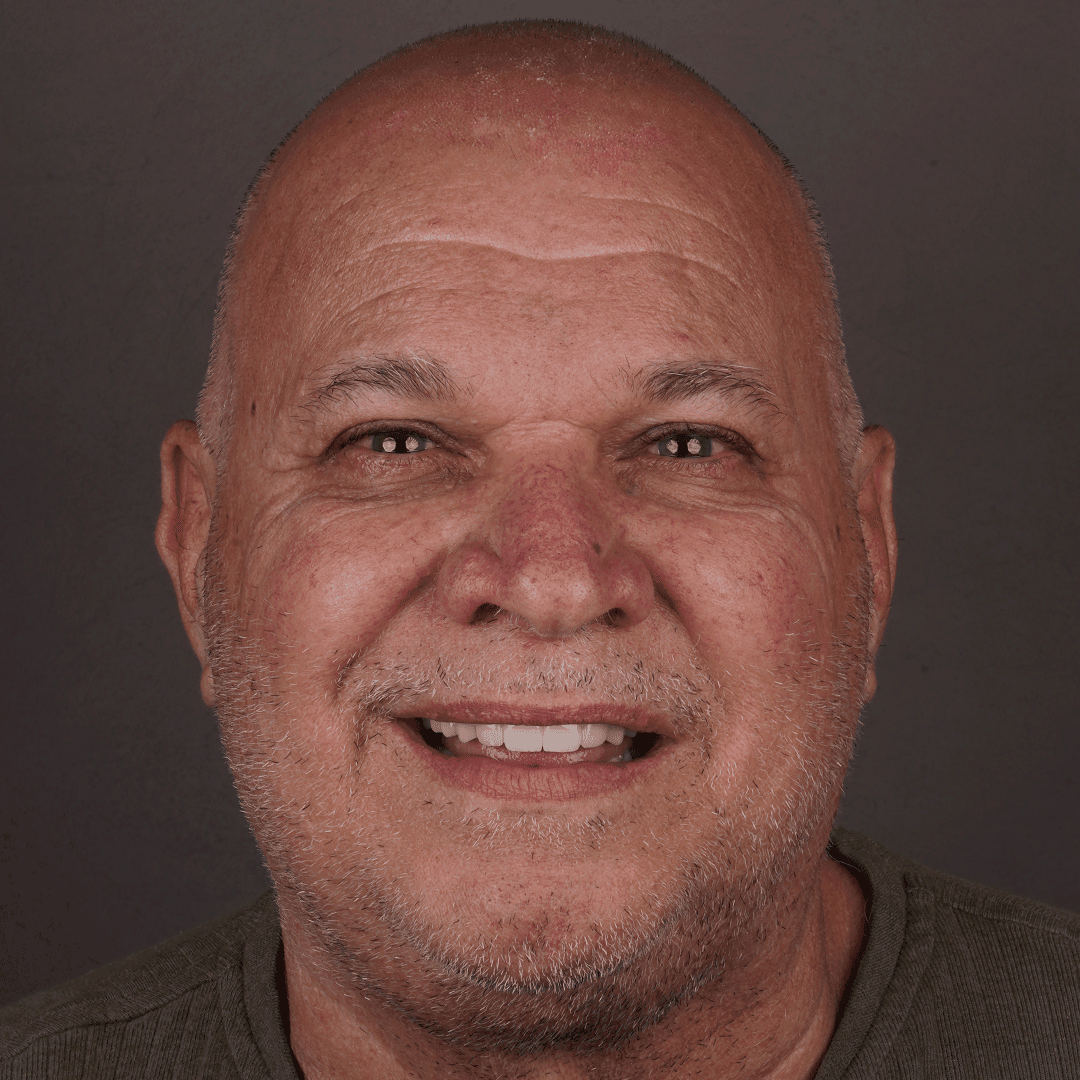
Pterygoid and zygomatic implants in complex cases
Some patients present severe bone loss in the upper jaw, especially in the posterior areas. In these cases it may be necessary to study different anchorage points to achieve adequate distribution of the implants.
Pterygoid implants
Pterygoid implants are directed towards posterior structures of the maxilla. In the clinic protocol they are usually used as subsequent support in full-arch rehabilitations, always after confirming by CT that the anatomy allows a safe trajectory.
Zygomatic implants
Zygomatic implants are longer implants that seek anchorage related to the zygomatic bone. They are reserved for the few cases of extreme maxillary atrophy that cannot be resolved with strategic implants alone. They require specific experience, three-dimensional planning and detailed evaluation of anatomical structures.
Combination of different types of implants
In full-arch rehabilitations, strategic implants are usually combined with pterygoid supports. Only in a minority of cases of extreme atrophy is it necessary to add zygomatic implants. Most patients can be rehabilitated with strategic and pterygoid implants without resorting to zygomatic anchorage.
Each type of implant has a trajectory and a specific biomechanical function within the plan. The CT scan defines when the usual pterygoid support can be used and when extreme atrophy requires the incorporation of a zygomatic implant.
The need for zygomatic or pterygoid implants can only be established after studying the 3D CT scan and the full-arch rehabilitation design.
Anesthesia and conscious sedation
The implants are placed using local anesthesia to control sensitivity in the treated area. Depending on the length of the procedure, complexity, medical history, and the patient’s anxiety level, conscious sedation may also be evaluated.
Conscious sedation seeks to reduce anxiety and improve comfort, but does not replace local anesthesia. It must be administered or supervised by the corresponding professional, after reviewing the medical history and confirming that the patient meets the requirements.
When sedation is scheduled, the device may indicate:
- Prior assessment and review of medical history.
- Complementary exams when indicated.
- Fasting during the period established by the professional.
- Assistance with a responsible adult companion.
- Do not drive or perform risky activities after the procedure.
- Pre-arrange transportation and recovery.
- Report all medications, supplements and allergies.
The modality of anesthesia or sedation is defined individually. Not all patients need it and not all can receive it under the same conditions.
Initial prosthesis and definitive rehabilitation
Treatment with strategic implants includes a surgical phase and a prosthetic phase. Implant placement is only part of the process: rehabilitation must be designed to connect the implants, distribute forces, restore function and provide an appearance consistent with the patient’s characteristics.
In full-arch rehabilitations, the first fixed prosthesis is usually made of PMMA, a material that allows adjustments to be made during the adaptation period. This initial rehabilitation should not automatically be interpreted as the definitive prosthesis.
Initial fixed prosthesis in PMMA
The initial prosthesis is designed from records obtained during or after surgery. Its function is to allow the patient to begin aesthetic and functional adaptation while monitoring healing, tissues, bite, and implant response.
During this stage adjustments can be made related to:
- The shape, length and position of the teeth.
- Lip support and facial appearance.
- The pronunciation of certain sounds.
- The contacts between the upper and lower arches.
- Comfort during chewing.
- The access necessary to perform hygiene.
- The adaptation of the prosthesis to tissue changes.
PMMA can suffer wear, pigmentation, cracks or fractures, especially when there are high forces, bruxism, inadequate bite or non-compliance with dietary recommendations. For this reason it needs follow-up visits and should not be considered indestructible.
Definitive rehabilitation
Definitive rehabilitation is planned after evaluating clinical stability, functional adaptation, hygiene, bite and tissue healing and changes. The appropriate timing is not identical for all patients.
The definitive single crowns are made of zirconia. In full-arch rehabilitations, a definitive prosthesis can be planned in zirconia, lithium disilicate or resin, depending on the design, bite, prosthetic space and the patient’s needs. In certain full-arch treatments, this phase is carried out after a period of approximately 8 to 18 months, provided that the clinical conditions are favorable; The interval may vary according to individual progress.
Why isn’t zirconia always placed immediately?
During the first months, inflammation, tissue contour, chewing, pronunciation and aesthetic perception may change. The initial prosthesis allows these changes to be observed and corrections made before manufacturing a definitive structure, whose adjustment or modification may be more complex.
The initial prosthesis is part of the treatment and needs care. Having fixed teeth from the early phase does not mean that the adaptation, healing and follow-up process is over.
PMMA and zirconia: differences between materials
The selection of prosthetic material depends on the stage of treatment, the extent of rehabilitation, the bite, the available space, aesthetic expectations, the possibility of hygiene and the treatment estimate. No material should be chosen solely for its appearance.
| Aspect | PMMA | zirconia |
|---|---|---|
| Regular use | It is frequently used for the initial fixed rehabilitation and adaptation stage. | It can be used for definitive rehabilitation when the case and clinical progress allow it. |
| Possibility of adjustments | Allows modifications and repairs to be made more easily during adaptation. | It needs precise planning because later modifications may be more limited. |
| Endurance | It can wear, pigment, crack or fracture under high forces. | It has greater resistance to wear, although it is not free of fractures or complications. |
| Aesthetics | It can provide a natural appearance and allows you to test changes in shape, size and color. | It can offer high color stability and a detailed aesthetic finish. |
| Clinical stage | It helps to observe the bite, pronunciation, hygiene and tissue changes. | It is considered after confirming that the tested design is clinically appropriate. |
| Maintenance | Needs checks, polishing and possible repairs or replacements. | It also requires checks, professional hygiene and periodic inspection of screws, structure and bite. |
The choice of material should be made after evaluating the entire system: implants, connections, structure, prosthesis design, bite, habits and maintenance capacity.
INITIAL PROSTHESIS AND DEFINITIVE REHABILITATION
Replace this box with your own and authorized photographs that allow you to compare an initial rehabilitation in PMMA with a definitive rehabilitation in zirconia.
Clearly identify each material and avoid presenting the image as a guaranteed result for all patients.
Recovery after surgery
Recovery depends mainly on the extractions necessary, the extent of the procedure, the condition of the tissues and the individual response. When the patient lost his teeth months ago and does not need extractions, the placement of strategic implants is usually carried out without flaps; For this reason, the majority of our patients have little inflammation, do not develop bruising due to placement, and report much less discomfort after 24 hours.
When extractions are performed on teeth in poor condition, inflammation, sensitivity or bruising may occur related to these extractions. There may also be more noticeable recovery in the few cases that require zygomatic implants. Flapless placement of strategic implants, by itself, typically results in considerably less tissue trauma.
First 24 hours
- Exactly follow the prescription and instructions provided.
- Apply external cold if recommended.
- Maintain relative rest and avoid exercise.
- Do not rinse vigorously or spit repeatedly.
- Do not touch wounds or implants with your fingers.
- Consume food according to the indicated consistency.
- Do not smoke or consume alcoholic beverages.
- Sleep with your head slightly elevated if your team advises.
First days
In most patients, there is no significant inflammation or hematoma due to the placement of the implants, because flaps are not raised. If they appear due to extractions or the exceptional use of zygomatic implants, the inflammation may initially increase before decreasing and the hematomas may move to nearby areas and change color as they resolve. Hygiene must be carried out using the indicated technique and products, avoiding traumatizing the operated areas.
Adaptation to the prosthesis
A new rehabilitation can temporarily modify the pronunciation, the perception of space, the way you chew and the contact between the teeth. Some adjustments are a normal part of the process, but any significant pain, mobility, or difficulty should be communicated to the team.
Feeding during the initial phase
Although the rehabilitation is fixed, hard, sticky foods or foods that require excessive force should be avoided during healing. The progression of the diet should follow clinical indications and not only the patient’s feeling of comfort.
Contact the team if you present
- Heavy or persistent bleeding that does not decrease with the indicated measures.
- Intense pain that increases or does not respond to prescribed management.
- Inflammation that worsens significantly after it has begun to subside.
- Fever, discharge, persistent bad odor or taste.
- Difficulty breathing or swallowing.
- Allergic reaction or significant adverse effects of medications.
- Mobility of the prosthesis, fracture or sudden change in bite.
- New, intense or persistent sensory alterations.
Difficulty breathing, a severe allergic reaction, or bleeding that cannot be controlled requires urgent attention.
Implant and fixed prosthesis care
Implants and rehabilitation require daily hygiene and professional follow-up. A fixed prosthesis cannot be removed at home, but it should be cleaned around the implants and underneath the framework to reduce the buildup of plaque, food debris, and inflammation.
daily hygiene
The team may recommend different items depending on the space available and the patient’s dexterity:
- Soft bristle toothbrush.
- Interproximal brushes of the appropriate size.
- Special dental floss for prosthetics or implants.
- Oral irrigator as a complement, not necessarily as a substitute for brushing.
- Hygiene products formulated by the professional.
- Specific techniques to clean under the rehabilitation.
Excessive force or incorrect use of instruments can damage tissues. The technique must be taught and checked during follow-up visits.
Food and habits
Prosthetic teeth should not be used to open packages, cut objects, bite into ice, bones, very hard seeds or other elements capable of causing fractures or overload.
Patients with bruxism may need a protective plate or other measures. The indication depends on the design of the rehabilitation and the functional assessment.
professional follow-up
The follow-up visits allow us to evaluate the tissues, hygiene, bite, stability of the prosthesis and the state of its components. They may also include professional cleaning, x-rays, or clinical removal of the prosthesis when indicated.
The frequency is set individually. As a reference, reviews can be scheduled during the initial stage and later follow-up visits at 1, 6, 12 and 18 months, adjusting them according to the evolution and risk of each patient.
The absence of pain does not guarantee that everything is fine. Some alterations of the tissues, screws, prosthesis or bite may begin without obvious symptoms and be detected during check-ups.
How long do strategic implants last?
Strategic implants are designed as a long-lasting solution. When the patient maintains good hygiene, attends check-ups, follows instructions and allows any changes in the bite or tissues to be corrected in a timely manner, it is expected that the implants will be able to accompany them for the rest of their life. As with any medical treatment, individual results cannot be absolutely guaranteed.
Among the factors that can influence the long-term result are:
- Planning and anchoring achieved.
- The distribution of the implants.
- The design and adjustment of the prosthesis.
- Control of the bite.
- Daily hygiene.
- Attendance at follow-up visits.
- Smoking.
- Diabetes and other systemic conditions.
- Bruxism or excessive force.
- The quality and maintenance of prosthetic components.
- Timely attention to any sign of complication.
The prosthesis does not necessarily have the same duration as the implants. Although implants remain clinically stable, rehabilitation in acrylic, resin, zirconia or other material may require maintenance, repair or replacement over the years due to wear and functional changes.
Can implants suffer from disease?
Implants do not develop cavities, but the tissues surrounding them can become inflamed or lose support. Therefore, plaque control, professional hygiene and clinical surveillance continue to be necessary.
Does the prosthesis need maintenance?
Yes. With use, wear, pigmentation, fissures, fractures, loosening of screws or changes in the bite may appear. Catching these problems early can prevent further damage.
Treatment continues after teeth are delivered
Long-term outcome depends on an ongoing relationship between the patient and the treating team. Hygiene, checks and maintenance of the prosthesis are essential parts of the treatment.
Follow-up for patients who live in another city or country
Patients traveling for treatment must arrange for surgery, initial rehabilitation work-up and at least one check-up prior to return travel. During this control, the occlusion, comfort and stability of the prosthesis are especially verified. International patients usually reserve about a week to complete these stages.
Before the trip
- Send panoramic x-ray, CT scan and photographs when requested.
- Report illnesses, medications, allergies and previous surgeries.
- Wait for guidance from the team before purchasing non-refundable flights.
- Confirm how many days it is recommended to stay in the city.
- Arrange support if sedation will be performed.
- Know which stages are included and which will require a later visit.
During the stay
The patient must remain available to attend tests, installation of the prosthesis and adjustments. The schedule may change if the clinical situation requires additional verification.
after returning
Follow-up can combine in-person follow-up visits with remote communication, photographs and coordination with a dentist in the city or country of residence. However, a virtual consultation does not always replace a clinical or radiographic review.
If an emergency arises, the patient must contact the team and seek in-person care when necessary. Before another professional removes, adjusts or modifies the prosthesis, it is a good idea to share information about the system used and coordinate management when possible.
Subsequent visits
In-person check-ups, professional hygiene and the definitive rehabilitation phase must be scheduled from the beginning. Traveling from another country does not eliminate the need for periodic maintenance.
Consult information for international patients and dental tourism in Colombia
Care of national and international patients
Professional support during assessment and treatment with dental implants.

Implantologists from the team with a North American patient
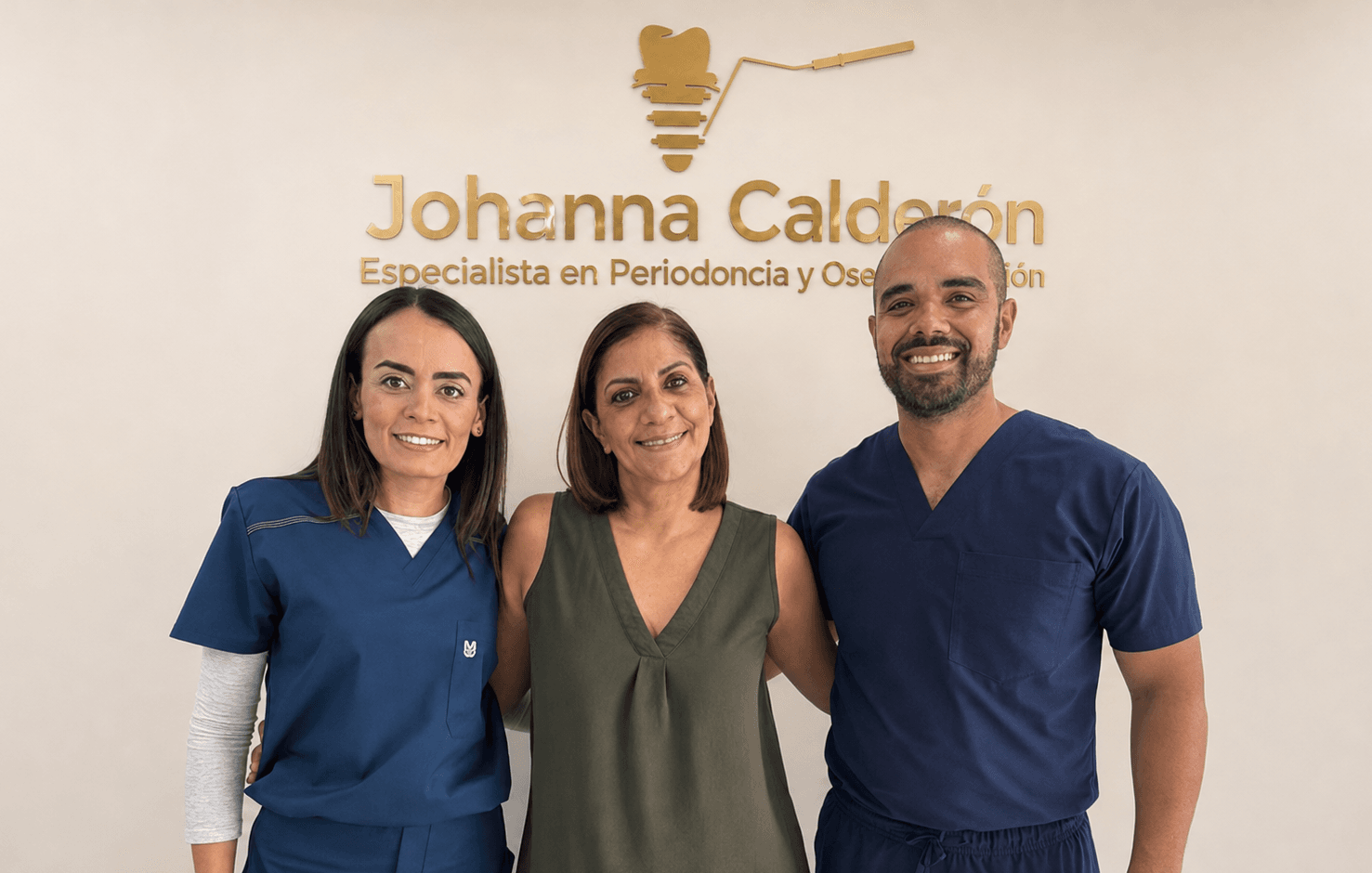
Implantologists from the team with a Central American patient
Clinical care provided by professionals from the implantology team. Photographs published with permission.
When can treatment be postponed or not recommended?
Safety takes priority over speed. Some conditions may require postponing surgery, seeking medical evaluation, managing an illness, treating an infection, or choosing a different alternative.
Among the situations that need special caution are:
- Uncontrolled systemic diseases.
- Acute infections that require prior management.
- Significant coagulation disorders without medical evaluation.
- Recent medical treatments that interfere with healing or the immune response.
- Use of certain medications associated with bone or surgical risks.
- Pregnancy, when the procedure can be postponed and there is no emergency.
- Inability to maintain minimal hygiene around rehabilitation.
- Expectations that do not correspond to clinical possibilities.
- Inability to attend check-ups or receive care in the event of a complication.
- Lack of sufficient diagnostic information to plan the case.
In some patients, treatment can be performed after controlling the identified factor. In others, it may be necessary to complete studies, coordinate medical management, or adjust the timing and design of the procedure.
Postponing does not mean rejecting the patient
It may mean that you first need to improve your general condition, complete studies, treat an infection, coordinate management with another professional, or prepare safer conditions for surgery.
How much do strategic implants cost in Colombia?
Cost cannot be responsibly established without knowing the diagnosis and extent of treatment. Two patients requesting “fixed teeth” may require different procedures, number of implants, components, materials and follow-up visits.
The treatment estimate may vary according to:
- The number of teeth that need to be treated or extracted.
- The quantity, design and distribution of implants.
- The need for pterygoid or zygomatic implants.
- Treatment of one arch or both.
- The surgical and prosthetic complexity.
- The modality of anesthesia or sedation.
- Diagnostic studies and complementary examinations.
- The initial rehabilitation material.
- The material and design of the definitive prosthesis.
- The prosthetic components used.
- follow-up visits, adjustments and maintenance included.
- The need for accommodation, transportation or other services for traveling patients.
What should a treatment estimate specify?
Before comparing prices, it is worth confirming what each proposal includes. An apparently lower value may correspond only to the surgical phase or provisional rehabilitation.
- Assessment and diagnostic studies.
- Number and type of implants planned.
- Extractions and surgical procedures included.
- Sedation, when indicated.
- Initial fixed prosthesis and material used.
- follow-up visits and adjustments during the initial phase.
- Repairs or maintenance conditions.
- Final prosthesis and estimated time of preparation.
- Situations that could generate additional costs.
- Payment and financing terms available.
Request a quote in stages
A clear treatment estimate must differentiate the assessment, surgery, initial fixed rehabilitation, check-ups and the definitive prosthesis. You should also indicate what may change after the in-person assessment or during the procedure.
Price should not be the only criterion: Professional training, planning, materials, follow-up, care for complications, and continuity of treatment must also be evaluated.
Financing and treatment planning
Depending on the treatment and current conditions, there may be payment options in stages or financing. Approval, deadlines, fees and requirements depend on the entity or modality used and must be confirmed before starting.
In rehabilitations that include an initial phase and a subsequent definitive prosthesis, the treatment estimate can be organized according to the clinical stages. This does not mean that it is advisable to stop follow-up after receiving the first prosthesis.
Before accepting financing
- Confirm the total value and the concepts included.
- Check the interest rate and financial cost.
- Ask about installments, terms and payment dates.
- Check if there are charges for additional studies or procedures.
- Confirms the value of definitive rehabilitation.
- Ask what happens if the plan changes during the in-person assessment.
- Read the cancellation or rescheduling conditions.
International patients must also consider flights, accommodation, food, transportation, sufficient stay for adjustments and possible subsequent trips for check-ups or definitive rehabilitation.
Assessment of strategic implants in Colombia
Dr. Johanna Calderón treats patients who require evaluation of implantology, periodontics and complex rehabilitations. Availability of procedures, clinical team and dates must be confirmed directly before travel.
Patient care in different cities
The assessment and coordination of treatment can be carried out for patients from Bogotá, Ibagué, Cali, Medellín, Barranquilla, Cartagena, Pereira and other cities in Colombia. The appropriate venue is confirmed according to the procedure, agenda and resources required for the case.
Patients who do not live nearby can begin with a remote orientation, sending the studies and requested information. This review helps estimate the possible complexity and length of stay, but does not replace in-person diagnosis.
International patients
Patients traveling from the United States, Canada, Puerto Rico, Bahamas and other countries can also request guidance. Before purchasing flights it is recommended to confirm:
- Whether the studies sent are sufficient for an initial orientation.
- How many days the treatment may require.
- In which city and headquarters each stage would be carried out.
- If you need a companion for the procedure or sedation.
- When would the initial fixed rehabilitation be delivered.
- What checks must be carried out before returning.
- When would I have to return for maintenance or permanent rehabilitation.
Please do not book flights or non-refundable accommodations based solely on a general 24 or 72 hour window. The estimated timeline for your case must first be confirmed.
How to request an evaluation?
To receive initial guidance, the patient can contact the team and explain what teeth they have lost, what treatments they have received and what their main need is. If you live out of town or country, you can submit available studies for preliminary review.
Prepare this information
- Full name and age.
- City and country of residence.
- Main reason for consultation.
- Previous illnesses and surgeries.
- Medications, supplements and allergies.
- Tobacco or vaping use.
- Previous dental treatments.
- Panoramic x-ray or CT scan available.
- Clear photographs of the smile and mouth.
- Approximate dates you could attend.
After reviewing the information, the team can indicate whether new studies are needed, how much time is recommended to be reserved for the assessment, and what stages could be considered. The diagnosis, the final plan and the treatment estimate are confirmed after the corresponding examination.
Request an evaluation of your case
Find out if the strategic implant protocol may be appropriate for your case.
Consult locations and schedule an assessment
The information sent by digital means allows preliminary guidance and does not replace clinical assessment.
Frequently asked questions about strategic implants
What are strategic implants?
They are implants whose protocol seeks to obtain stability through anchoring in selected cortical areas of the bone. Immediate loading and splinting with crowns or fixed prosthesis in 24 to 72 hours are essential phases to join the implants, distribute forces and limit micromovements.
Are strategic implants the same as basal implants?
The terms strategic, basal, cortical, single-phase, or single-piece implants can be used to describe related systems and concepts, but are not always completely equivalent. The implant design and clinical protocol must be specifically identified for each treatment.
Are they one-piece implants?
Many systems used in strategic implant dentistry have a monoblock or monophasic design, in which the implant and the prosthetic connection form a single piece. However, the selection depends on the system, anatomy and the goal of rehabilitation.
Can implants be placed when there is limited bone?
The majority of patients with bone loss can be studied to take advantage of cortical anchorage points other than those used by conventional implants and avoid grafts. Some unit rehabilitations in zones 16, 17, 26 and 27 may present greater difficulty when the sinus floor is lowered.
Can bone grafts always be avoided?
The strategic implant dentistry protocol used by the clinic does not incorporate bone grafts or sinus lifts. Instead of first rebuilding the lost bone, it looks for support in cortical and other available anatomical points; The CT scan allows us to confirm how it can be applied in each case.
Can I have fixed teeth in 24 or 72 hours?
Yes. When this protocol is indicated, the initial fixed rehabilitation is delivered and splinted within the first 24 to 72 hours. It is not an optional phase: it is an indispensable part of the biomechanical control of the treatment. The case must be planned from the beginning to complete this stage.
Are the teeth delivered initially the definitive ones?
Not necessarily. In many rehabilitations, a fixed provisional prosthesis is first delivered, often made of PMMA or other provisional material. After stabilization of the tissues and the bite, definitive rehabilitation can be planned, for example in zirconia, if indicated.
When is the definitive prosthesis placed?
The moment is determined individually. Clinical stability, healing, tissue changes, functional adaptation, hygiene and bite behavior should be assessed. In certain treatments it can be considered after several months of follow-up.
Is the procedure painful?
The surgery is performed under anesthesia and, when indicated, conscious sedation. Since placement is usually done without flaps when teeth are already missing, most patients experience minor discomfort and little swelling. Extractions or the exceptional use of zygomatic implants can produce a more noticeable recovery.
Can conscious sedation be used?
It can be considered in selected patients and procedures, after assessing the history and safety conditions. Sedation does not replace local anesthesia and requires preparation, monitoring and subsequent support.
How long does recovery last?
When no extractions are needed and the implants are placed without flaps, recovery is usually quick and many patients report minimal discomfort after 24 hours. Zygomatic extractions or implants can cause inflammation or bruising. In all cases, the diet, hygiene and indicated restrictions must be followed.
How long do strategic implants last?
With good hygiene, regular check-ups and compliance with instructions, it is expected that the implants can accompany the patient for the rest of their life, although no medical result can be absolutely guaranteed. Prostheses made of acrylic, resin, zirconia or other material may require maintenance or replacement due to wear.
What happens if one of the implants fails?
The behavior depends on the location, cause, timing and function of the implant within the rehabilitation. Bite adjustment, denture repair, implant removal, replacement, or plan modification may be required.
Can I receive treatment if I have diabetes?
Diabetes does not automatically exclude implants, but its control and the patient’s general condition must be assessed. Uncontrolled diabetes can increase the risks of infection, impaired healing, and tissue complications.
Should I stop blood thinners before surgery?
They should not be suspended by their own decision. Management is determined based on the medication, dosage, procedure, and medical condition. When necessary, it should be coordinated with the professional who formulated the treatment.
Can I smoke after having implants placed?
Smoking can affect healing and increase the risk of inflammation and complications. The treating team may recommend stopping or reducing consumption before and after the procedure and explain how it influences the prognosis.
Can strategic implants be placed in a single tooth?
certain single-tooth restorations can be studied, but the indication, implant design and loading moment depend on the area, bite, stability and prosthetic space. Not all missing teeth should be treated with the same system.
Are they the same as All-on-4 or All-on-6?
Not necessarily. All-on-4 and All-on-6 describe full-arch rehabilitations usually supported by four or six implants. Strategic implant dentistry is related to a concept of anchorage and biomechanical distribution that can use another number, design or position of implants depending on the case.
When are zygomatic or pterygoid implants needed?
Pterygoid implants are commonly used as posterior support in total clinic rehabilitations. The zygomatics are reserved for very few cases of extreme atrophy; The majority is resolved with strategic implants without needing them. The indication is confirmed by 3D CT scan.
Is a virtual assessment enough to get started?
The virtual assessment can be used to review history, photographs and studies and offer initial orientation. It does not replace the in-person examination nor does it allow the procedure, the final number of implants, the result or the final treatment estimate to be guaranteed in advance.
How many days should an international patient stay in Colombia?
It is usually recommended to reserve about a week to perform the surgery, make and install the fixed prosthesis, and check the occlusion before the return trip. The final schedule is confirmed based on the diagnosis and extent of treatment.
How much do strategic implants cost?
The value changes depending on the number and type of implants, complexity, sedation, initial prosthesis, final material and follow-up visits. To compare proposals, it must be verified whether they include surgery, components, initial fixed teeth, adjustments and definitive rehabilitation.
These answers are general. Anatomy, medical history, and prosthetic needs may change the recommendation for each patient.
Clinical information based on individual assessment
The information available on dental implants must be interpreted considering that there are different systems, surfaces, surgical designs and prosthetic protocols. The results of a technique cannot be automatically applied to all implants or all patients.
The scientific evidence must be analyzed together with the professional’s experience, diagnosis, anatomy, general condition, patient preferences and the possibility of performing maintenance. Clinical studies provide information on groups of patients, but do not guarantee individual results.
What aspects should be evaluated when reviewing information about implants?
- The design and implant system studied.
- The number and characteristics of the patients included.
- The tracking time.
- The definition used for success, survival or complication.
- The type of prosthesis delivered.
- The presence of patients who abandoned follow-up.
- The experience of the participating professionals and centers.
- Conflicts of interest and funding sources.
- The difference between initial results and long-term results.
Survival does not mean absence of complications
An implant can remain in the mouth and still need treatment for inflammation, loss of support, loosening of components, changes in the bite, or problems with the prosthesis. That is why it is important to review both the permanence of the implants and the function, the health of the tissues and the required maintenance.
Sources and references for the patient
For more general information on dental implants, peri-implant health, diagnosis and patient safety, recognized scientific and health organizations can be consulted. The inclusion of these sources does not mean that they endorse a particular treatment, implant brand, or practitioner.
- American Academy of Periodontology: information for patients about dental implants.
- European Federation of Periodontology: information for patients about periodontal and peri-implant health.
- International Team for Implantology: education and resources related to oral implantology.
- World Health Organization: general information about oral health.
External sources may update their content or modify their links. The information on this page should be reviewed periodically and does not replace recommendations derived from clinical assessment.
Information reviewed by Dr. Johanna Calderón

Dr. Johanna Andrea Calderón Bohórquez
Dentist specializing in Periodontics and Oral Implantology, dedicated to the assessment and treatment of patients with tooth loss, periodontal disease, bone loss and rehabilitation needs through dental implants.
His practice includes the evaluation of conventional alternatives and advanced anchoring techniques for selected cases, as well as the coordination of treatments for national and international patients.
Learn about the professional profile, training and experience of Dr. Johanna Calderón
Clinical content review: Dr. Johanna Andrea Calderón Bohórquez.
Last update: August 2026.
Do you need to know what type of implant may be appropriate for you?
An assessment allows us to establish how the strategic implant protocol can be applied according to your health, the CT scan, the condition of the tissues and the type of fixed rehabilitation you need.
Consult locations and request an assessment
Care of patients from Colombia and abroad. Initial remote guidance does not replace in-person clinical assessment.
Medical notice: This content is for educational purposes and does not constitute a diagnosis, prescription or guarantee of results. Each treatment requires a clinical history, professional assessment, diagnostic studies and informed consent.